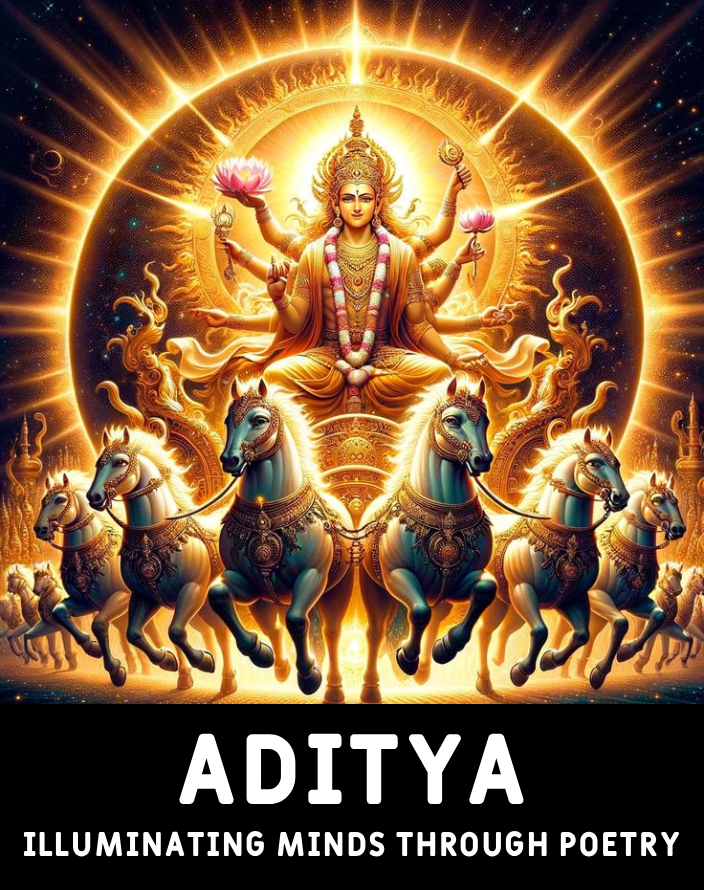

In the Vedas and Upanishads, Pawan Dev, also known as Vayu, is not just the God of the Winds but the very essence of movement, life, and liberation. He flows as Prana, the subtle breath that sustains all creatures, and as Marut, The wild cosmic winds that shape and dissolve worlds. Vayu exists both within and beyond; as the air that sustains life and as the invisible force that ferries the soul between realms. His role transcends physical phenomena; He symbolises impermanence, transformation, and spiritual freedom, reminding us that to live is to breathe, and to breathe is to flow with the ever-changing rhythm of the universe.
Vayu’s presence touches the three realms; Bhu (Earth), Antariksa (the Atmosphere), and Dyuloka (the Heavens). As the first God to taste Soma, the nectar of immortality, He carries the divine essence between realms. His nature is both gentle and fierce: He nurtures life with a soft breath yet brings destruction with storm and gale. In His every movement lies the profound wisdom of the Aum, the eternal sound that binds all existence. This poem draws from the profound metaphors of ancient scriptures to capture the essence of Pawan Dev as the unseen thread weaving life, death, and liberation together.
O Vayu, breath of Gods, pulse of the skies,
Who stirs the stillness where silence lies.
You are the sigh that heralds dawn,
And the gale through which old forms are gone.
You ride unseen on stallions of cloud,
Windswept mane and thunder loud.
As Marut, You churn oceans deep,
Awakening mountains from slumber’s steep.
In the forest’s hush, You drift and glide,
Through falling leaves, Your whispers abide.
Each leaf, a thought that time must take,
Scattered dreams that winds forsake.
You are the dance of dust and seed,
The unseen hand that nurtures need.
O wind, both fierce and calm as sleep,
You carry storms and secrets deep.
From Prana, the breath in every chest,
You stir each life in work and rest.
Like the tides that rise and then recede,
You come and go, fulfilling need.
Through realms you fly, a traveler free;
Earth below, sky above, and The Gods’ decree.
Between Bhu, Antariksa, and Dyuloka wide,
You link the worlds where spirits reside.
First to taste the Soma’s bliss,
You carry heaven’s intoxicating kiss.
Through You, the cosmic Aum resounds,
Echoing in stone, in stars, in grounds.
O Bringer of change, O Wind most wise,
In You, the mortal and immortal rise.
For every birth must meet its night,
And every soul must take its flight.
As Pralaya sweeps the worlds away,
You teach that nothing can ever stay.
Through loss and gain, your winds move on,
Breaking the dusk, birthing the dawn.
Pawan Dev’s role in the Vedas and Upanishads reveals the profound interplay between breath and spirit, movement and stillness, creation and dissolution. As Vayu, He is both the giver and taker, The force that sustains life and The wind that scatters the old to make way for the new. His movement across the three realms speaks to the unity of all things: earthly, atmospheric, and divine. Through the practice of pranayama (breath control), yogis strive to harmonize with Vayu’s rhythm, for mastering breath brings mastery over the ātman (soul), leading it towards liberation.
In Pawan Dev’s winds lies a cosmic truth: life is a cycle, a series of moments that come and go, like breath itself. His message is one of detachment; just as we cannot hold the wind, we cannot hold life’s fleeting moments. To live fully, we must flow with the wind, embracing both joy and sorrow, creation and dissolution. Through Vayu, we glimpse the path to moksha, the final release; where the breath that animates the body returns to its eternal source, merging with the infinite.
Glossary of Key Terms
- Vayu / Pawan Dev: The God of wind, breath, and cosmic movement in Hinduism.
- Prana: The vital life force, present in breath, that animates all beings.
- Marut: The storm winds, symbolic of Vayu’s more powerful and destructive aspect.
- Soma: A sacred drink of immortality, representing divine ecstasy and inspiration.
- Bhu: The earthly realm in Hindu cosmology.
- Antariksa: The atmospheric realm between Earth and Heaven.
- Dyuloka: The celestial or heavenly realm of the gods.
- Pralaya: The dissolution or destruction of the universe at the end of a cosmic cycle.
- Aum (Om): The primordial sound representing the essence of the universe and the interconnectedness of all existence.
- Pranayama: The yogic practice of breath control, used to calm the mind and align with cosmic energy.
- Atman: The individual soul or self, which ultimately seeks unity with Brahman, the supreme consciousness.
- Moksha: Liberation from the cycle of birth and rebirth, the ultimate spiritual goal in Hindu philosophy.
This poem intertwines esoteric depth with poetic eloquence, reflecting the mystical and practical aspects of Pawan Dev’s presence. It reveals that, like the wind, life is not meant to be controlled but embraced; flowing freely, moment by moment, until the breath returns to the vast, eternal sky.
Please note that this poem reflects my personal understanding, shaped by my perception, which is but a drop in the vast ocean of knowledge. I welcome your thoughts and constructive feedback. However, those unwilling to engage respectfully are advised to refrain from commenting.
Shloka from the Rig Veda
A shloka that is often associated with Pawan Dev (Vayu Deva)—The God of wind and life force—comes from the Rig Veda. Here’s one that invokes His power and essence:
ऋग्वेद 10.186.1
“शुद्धो देवानां वायुः पवते कनिक्रदत्।
आत्मानं देव ईयते।”
Transliteration:
“Shuddho devanām vāyuḥ pavate kanikradat,
Ātmānaṃ deva īyate.”
Meaning:
“The pure Vayu, roaring mightily, moves for the gods,
He drives the divine essence within all beings.”
This verse celebrates Vayu as the breath of life that permeates the universe. It highlights His role not just as the wind, but as the carrier of divine energy (prana) that sustains every living being.
Shloka from Yajur Veda
Here is another beautiful shloka that further emphasizes Pawan Dev’s importance as the life force, taken from the Yajur Veda:
यजुर्वेद 34.31
“वायुरनिलममृतमथेदं भस्मान्तं शरीरम्।
ॐ क्रतो स्मर कृतं स्मर क्रतो स्मर कृतं स्मर।”
Transliteration:
“Vāyur anilam amṛtam athedaṃ bhasmāntaṃ śarīram,
Om krato smara kṛtaṃ smara krato smara kṛtaṃ smara.”
Meaning:
“Air (Vayu) is the immortal life force, and the body is destined to become ashes. O mind, remember your deeds, remember; O mind, remember what you have done, remember.”
Vayu is the breath of immortality, while the body is destined to decay and return to dust. Remember your deeds and intentions, for they guide your liberation.
This verse points to Vayu’s essential role in maintaining life through breath and the eventual dissociation of the soul from the body, symbolizing death. This verse reflects Vayu’s dual nature; He is both the giver of prana (life force) and the witness to the impermanence of the physical body. It urges mindful living, reminding one to reflect on their deeds and stay aligned with the eternal essence, of which Vayu is a carrier.



 Addy's Verse
Leave a comment