poetry
-

Verse 1:Wake up laughing, morning light upon your face,You turn the ordinary into something we can chase.With every breath, the universe feels near—You’re my magic, my adventure, year to year. Pre-Chorus:With you, the shadows vanish, fears all fade,Even rainy days are songs we made. Chorus:We’re dancing through the day, two hearts alive,Spinning under galaxies,…
-

[Verse 1 – full throttle from the first chord]When I’m dead and gone, love, throw me to the roaring flameLet the pyre be a bonfire that sets the whole damn night insaneNo coffins, no sermons, no folding of hands in prayerJust gasoline, guitars, and a sky that’s too drunk to care [Chorus – every throat…
-

[Verse 1]Beneath the quiet hush of evening skiesSoft footsteps fade where silent shadows fallThe choices we have made, both wrong and wiseAre carried gently in the river’s call [Chorus]Flow, river, flowCarry me where the heart is freeGlow, river, glowShow tomorrow what I’m meant to beEvery memory a petal on the streamDrifts away yet lives…
-
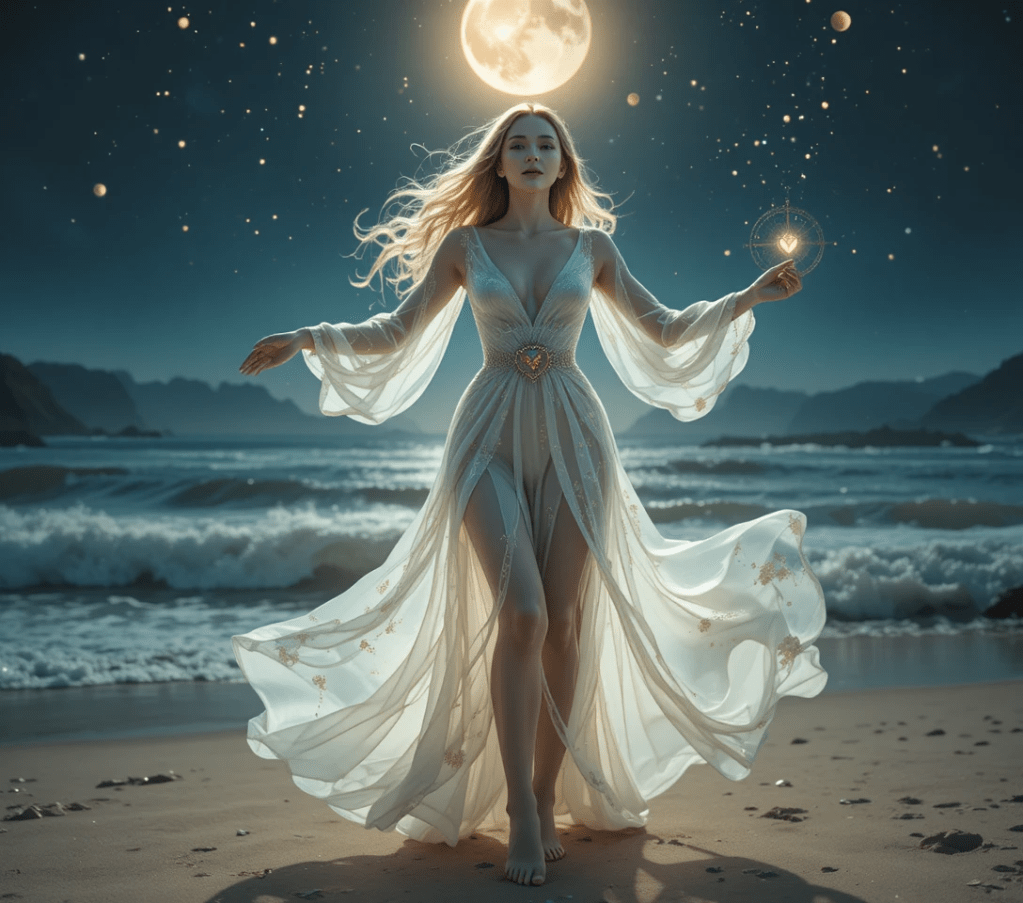
[Verse 1]Like a whispered promise, your love does kissEvery corner of my soul, gentle and warmIn its embrace, I’ve found life’s sweetest blissA shelter from every passing storm [Pre-Chorus]Beneath the velvet sky where moonlight sighsOur hearts entwine like stars in cosmic dance [Chorus]Your gaze—a galaxy within your eyesHolds me breathless in love’s timeless tranceOh-oh-oh,…
-

[Verse 1]Twilight wraps around us as we step outside,Streetlamps sparkle like diamonds in your eyes.Fingers intertwined, we wander slow and free,Your whisper pulls me closer, sets my spirit free.The world blurs away in this golden hour haze,Every heartbeat echoes your endless grace. [Pre-Chorus]We’ve raced the horizons, claimed every thrill,Laughed through the chaos, bent to our…
-

[Verse 1 – Andante, veiled strings]When the mind’s quiet fortress yields to the tide,And every guarded thought steps outside,What flows from the breach is neither night nor day—A gentle upheaval in soft disarray. [Pre-Chorus – cello sings alone]Old sorrows and joys rise hand in hand,Like long-lost friends on familiar land.The names I carried melt into…
-

[Verse 1]In the folds of the cosmos, where shadows embrace,A thread of forever weaves through empty space.Silent the stars hum, their secrets unfold,Binding the unseen to stories untold.No weight to the heart that surrenders its claim,It burns in the void, yet it carries no name. [Chorus]Oh, through the veil where the endless collide,We dissolve in…
-

[Verse 1]In shadows’ depths where silent tempests play,We weave our masks beneath the light of day.A visage shines, a shield from prying scorn,Yet truth retreats, a sigh where souls are born—Each smile a beacon, each tear a veiled cry,We tread the line where self and guise comply. [Chorus]Oh, duality divine, where masks and truths entwine,A…
-
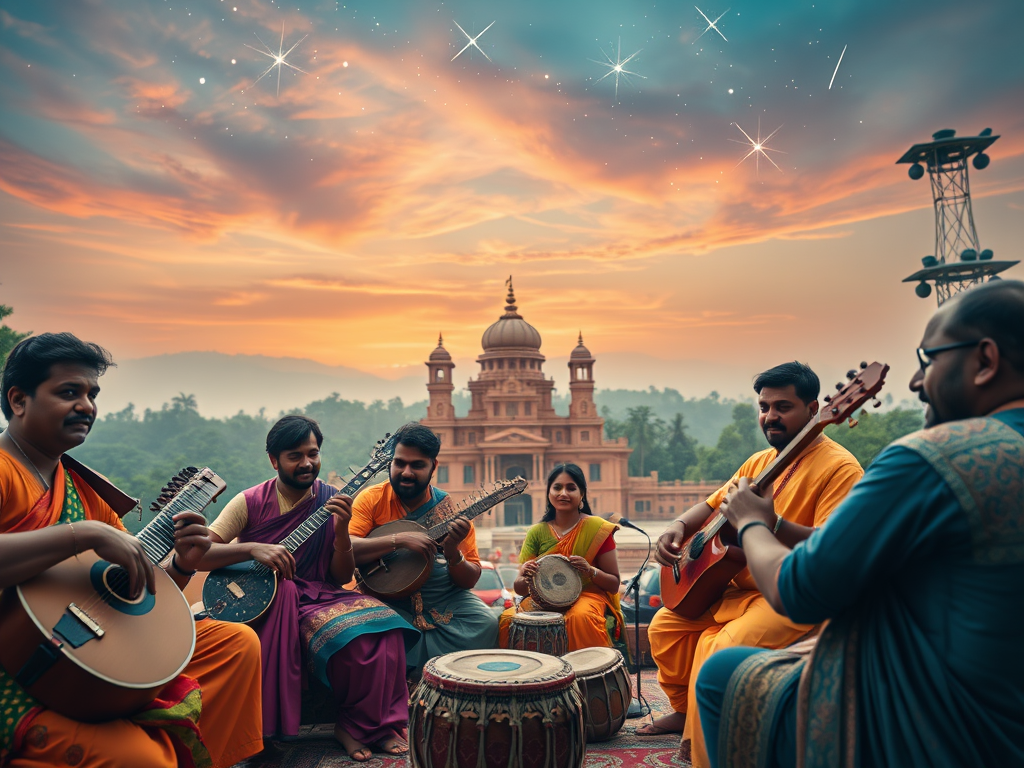
Indian classical music is not merely sound but the language of the cosmos, a sacred tradition that reaches back to the very origins of existence. At its heart lies “Om”, the primordial vibration believed to be the sound of creation itself. This eternal hum, discovered by India’s ancient sages, resonates with the fabric of…
-

A woman exhibits a profound blend of joy and sadness, her tears symbolizing both sorrow and the relentless passage of time. Clad in a deep blue gown, she embodies both delicacy and a timeless spirit, akin to a river merging with the sea, caught in a thrilling state of uncertainty. Her gaze, striking and…
 Addy's Verse