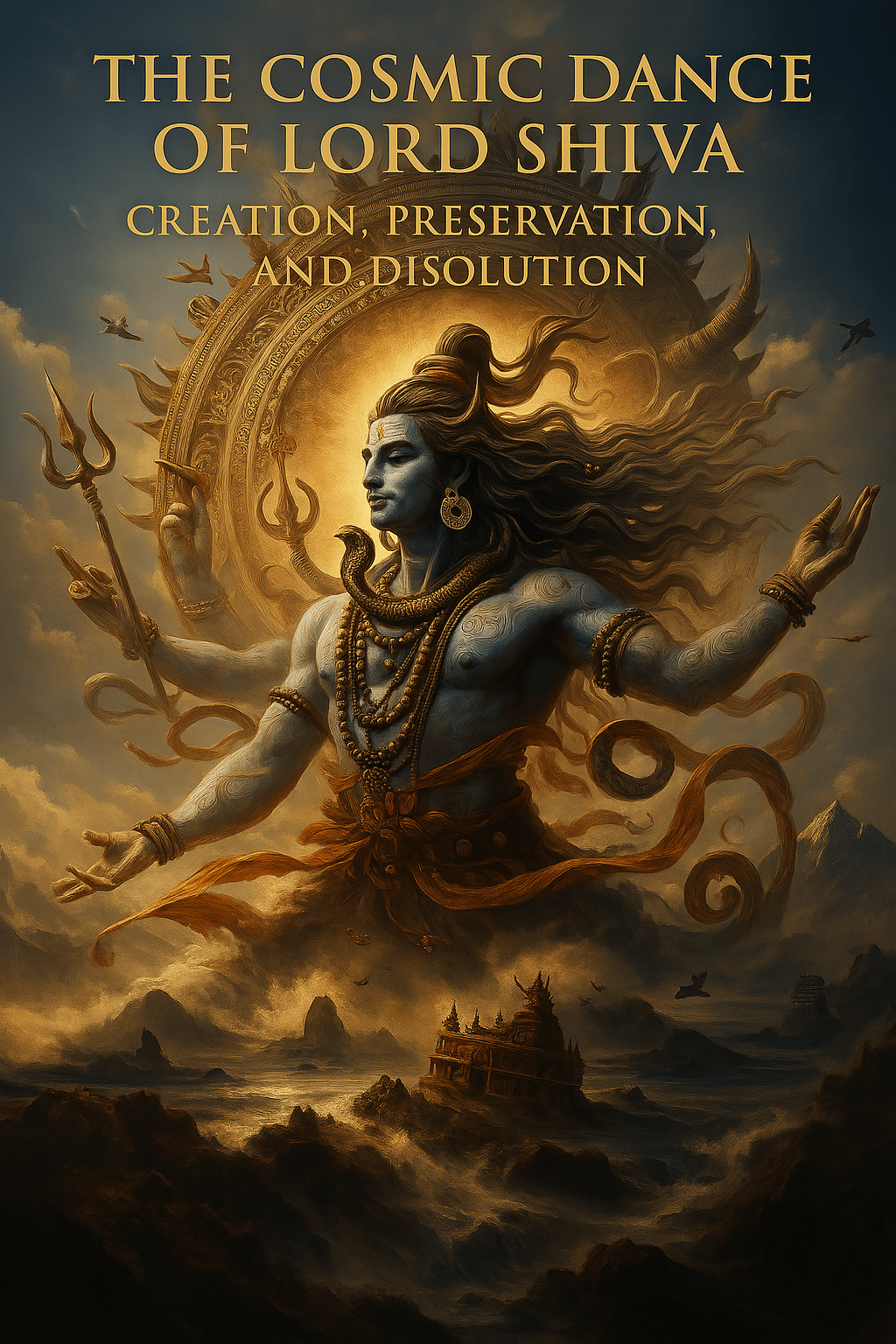
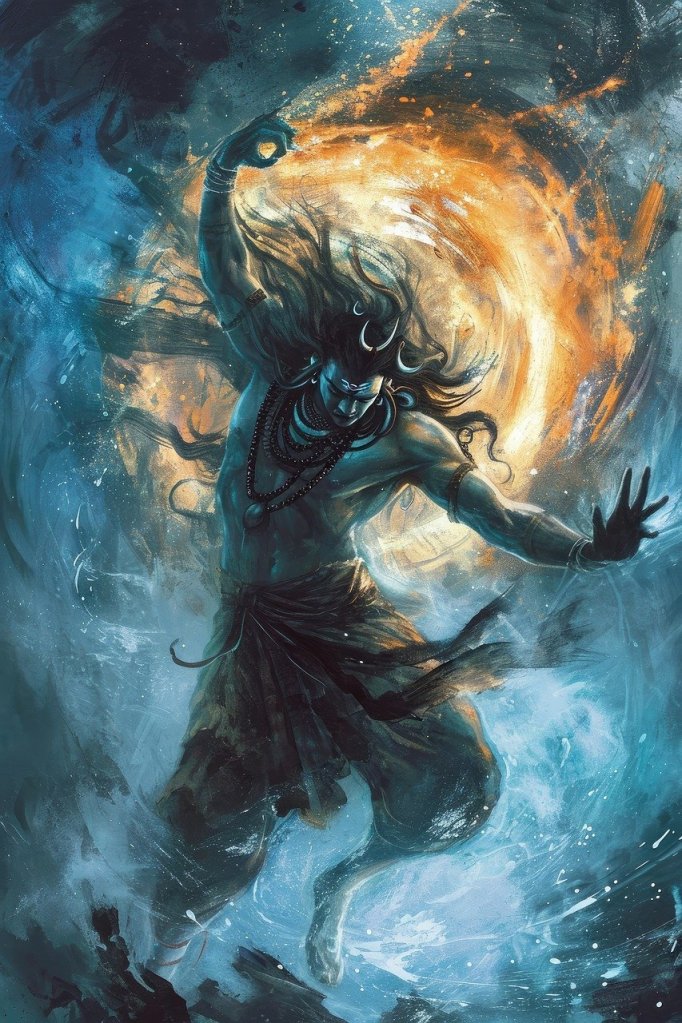
In Hindu philosophy, Lord Shiva embodies both the ascetic and the cosmic dancer, Nataraj, with his dance, the Tandava, symbolizing the cycle of creation, preservation, destruction, and rebirth. This dance is described in sacred texts as the pulse of the cosmos, illustrating how the universe emerges, flourishes, and dissolves. Lord Shiva upholds the balance between chaos and order, highlighting life’s transience and the divine presence.
The Brihadaranyaka Upanishad reflects this truth:
“From Brahman, as the Self, come space, wind, fire, water, and earth.”
This primordial sequence resonates with Lord Shiva’s dance, where each movement represents both the emergence and dissolution of the elements. His steps echo the cosmic truth that destruction is not the end but the path to new beginnings. Through the Tandava, Lord Shiva invites us to transcend fear and illusion, guiding us to discover the eternal Self within.
The Dance Eternal: A Hymn to Lord Nataraj
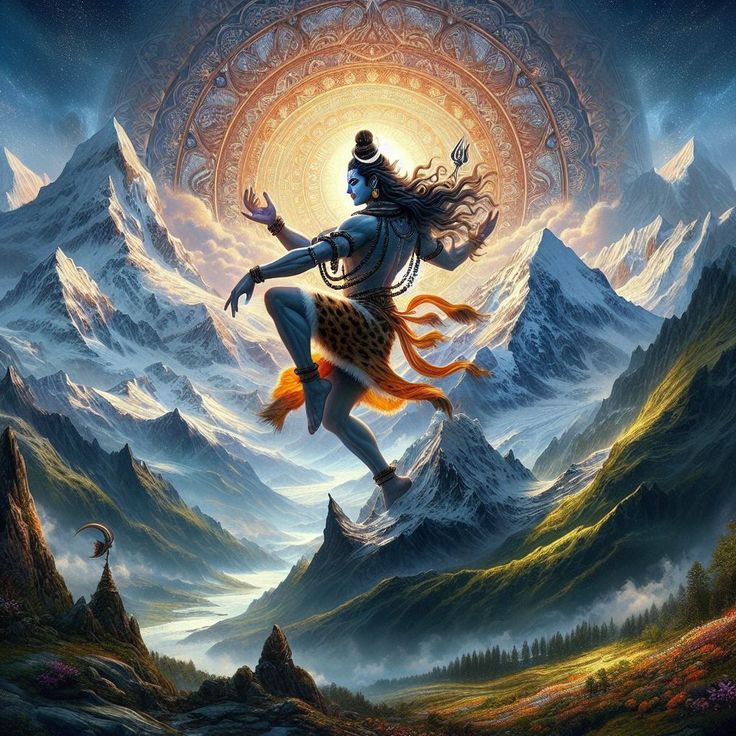
In the void before all things began,
He alone existed; Lord Shiva, beyond time’s span.
Neither being nor non-being marked the start,
For he is both essence and every art.
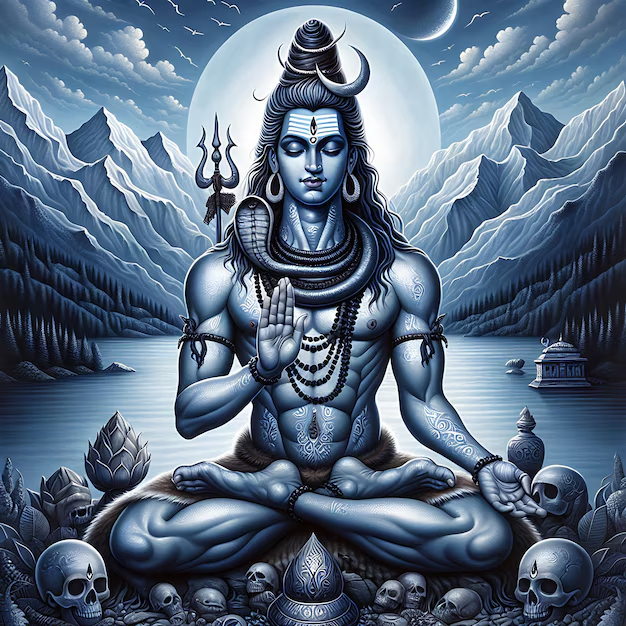
The moon upon His brow waxes and wanes,
A witness to cycles that life sustains.
The serpent coils upon His throat,
Binding poison, so life may float.
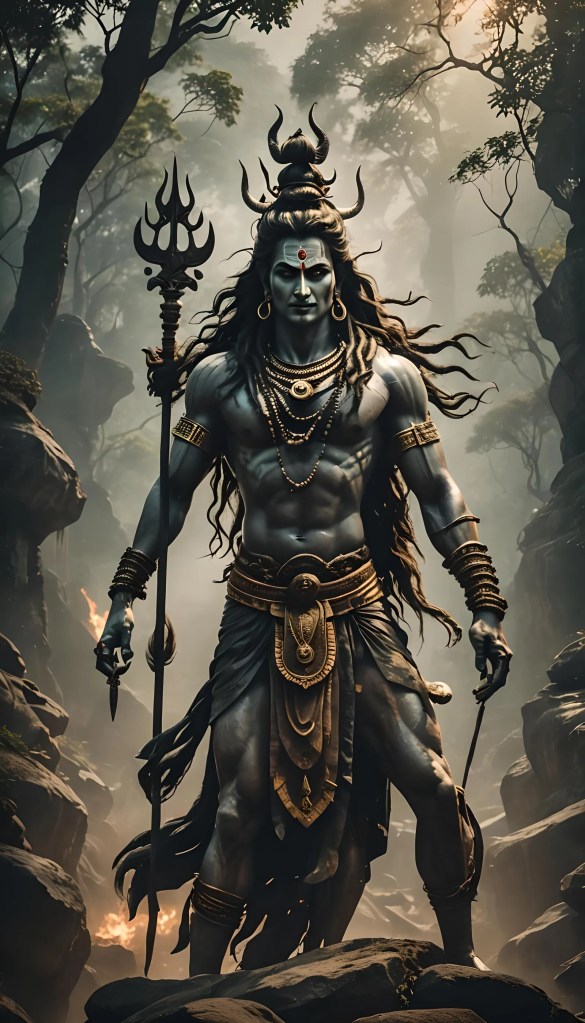
The Vedas call Him Lord Rudra, fierce and vast,
The tempest in which all things are recast.
He neither clings to what is nor fears the end,
He breaks illusions and hearts that bend.
The ashes smeared upon his skin
Remind us, all must return within.
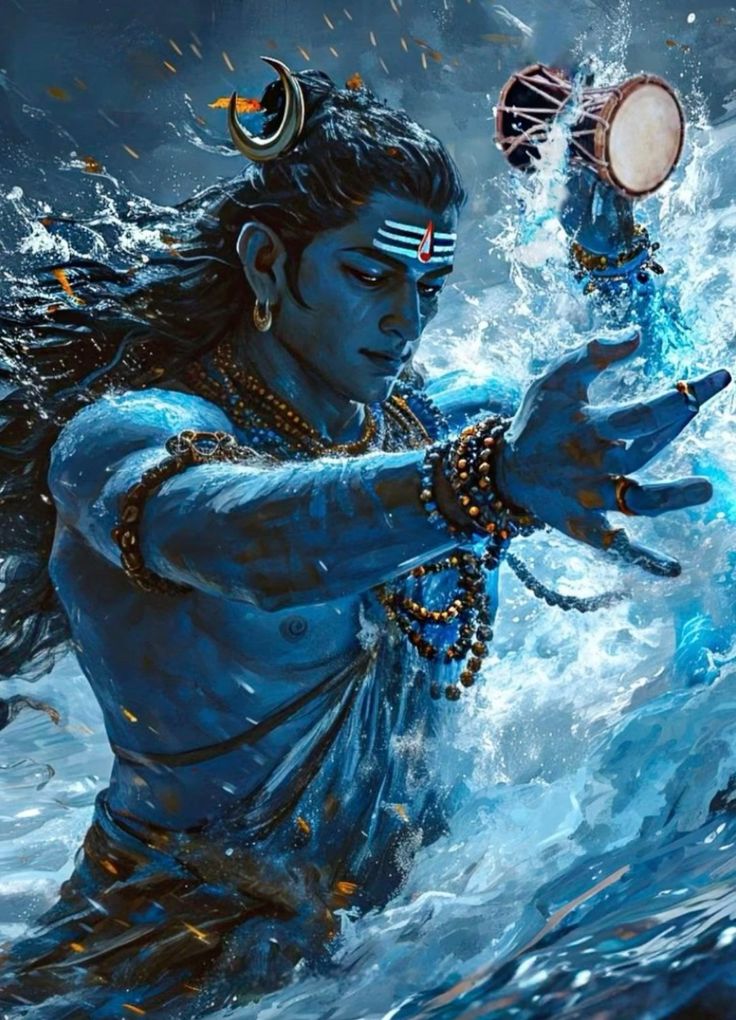
He holds the Damaru, the drum of birth,
Whose beat brings galaxies into mirth.
Creation unfolds at every sound,
And in its pulse, new life is found.
From dust to star, from breath to stone,
All things arise, yet none alone.
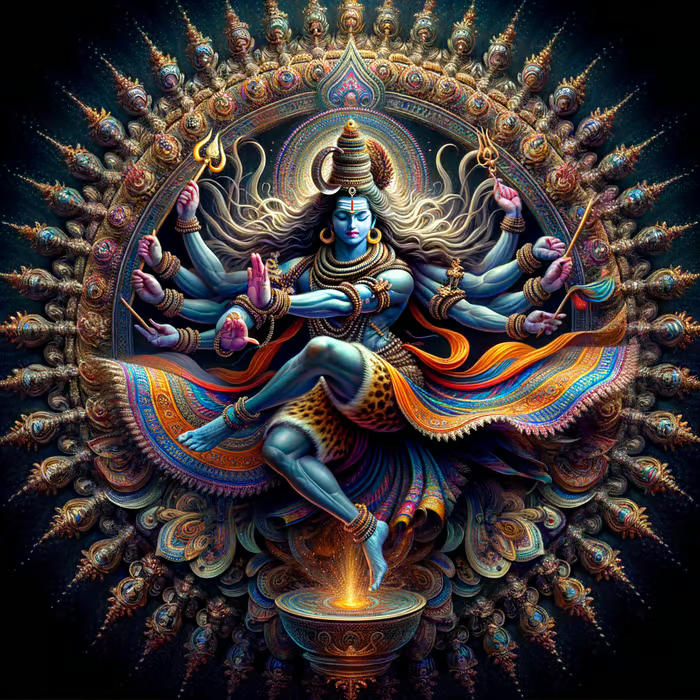

Aum vibrates through the formless night,
A soundless pulse, creation’s light.
From void to being, it softly hums,
The cosmic drumbeat—life becomes.
Aum, the seed from which all flows,
In every breath, its presence grows.

The Mandukya Upanishad declares:
“Aum, the imperishable sound, is the Self beyond time. It is past, present, future, and that which transcends all.”
Lord Shiva’s dance embodies this sacred sound;
In His rhythm, time is both lost and found.
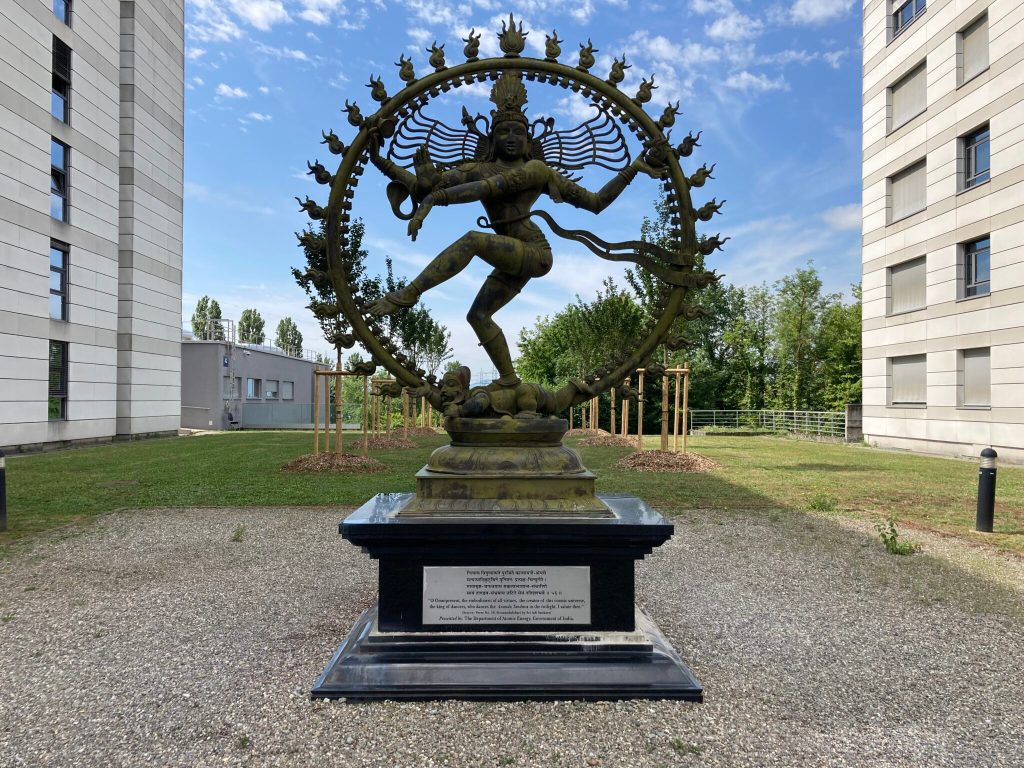
He raises His right hand in Abhaya’s grace,
Dispelling fear from every space.
His left foot rises, salvation’s way,
A path for souls that dance and pray.
Beneath His steps, ignorance lies,
As Apasmara, the demon, dies.
He is the rhythm of life’s refrain;
From destruction, creation blooms again.
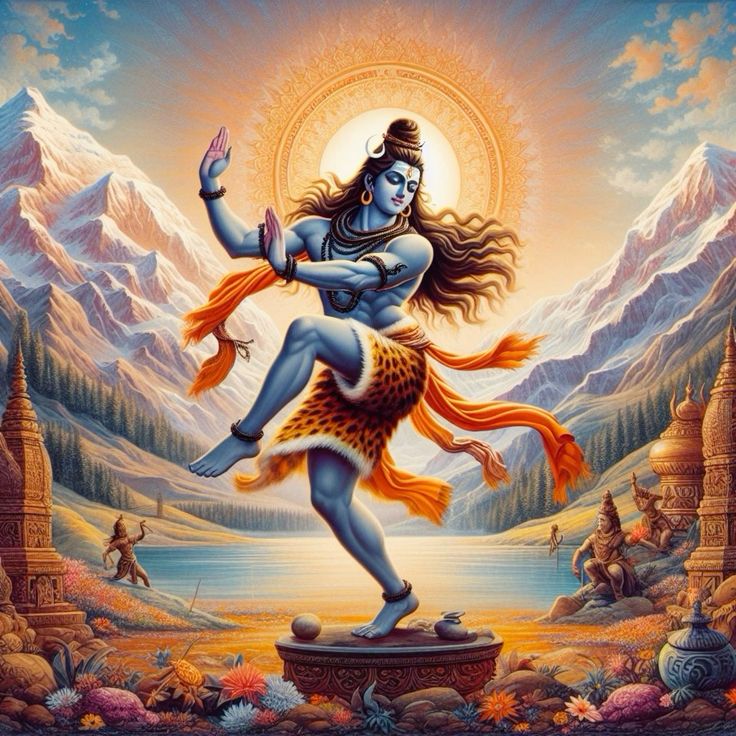
The Shvetashvatara Upanishad sings:
“He alone is the God of Gods, hidden in all, beyond form, and bound by none.”
Thus Lord Shiva, beyond name and face,
Moves through life’s eternal race.
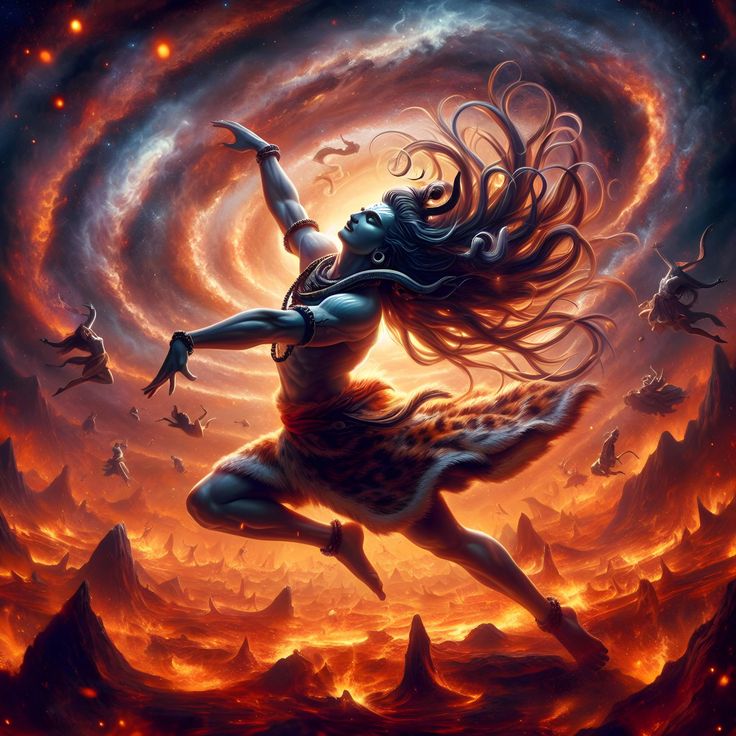
Galaxies whirl where His footsteps land,
Time and space at His command.
His third eye blazes, truth laid bare,
Revealing the divine everywhere.
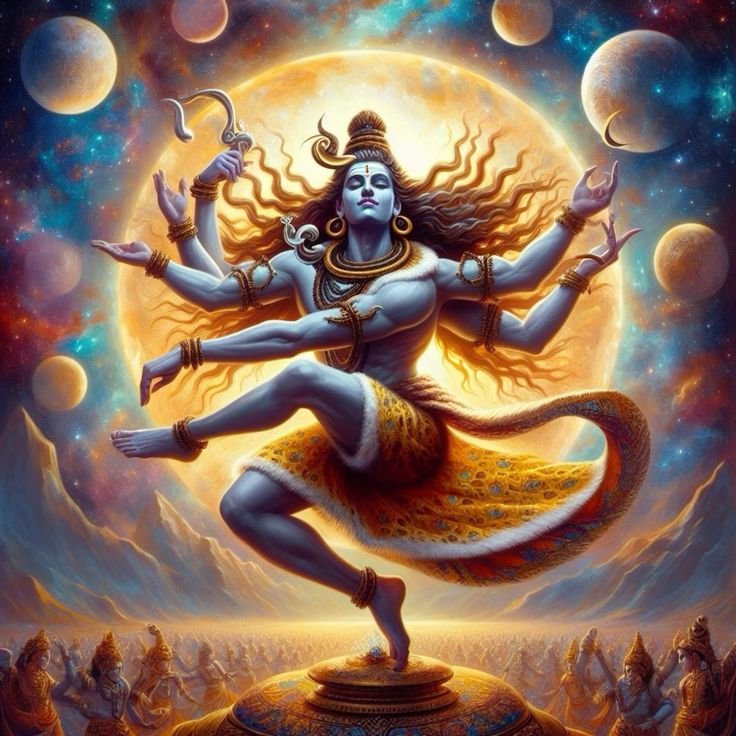
In every beat, creation plays,
Yet destruction marks the end of days.
From endings, new life will arise,
Like suns reborn in darkened skies.
His dance dissolves what clings to form,
A sacred rhythm through light and storm.
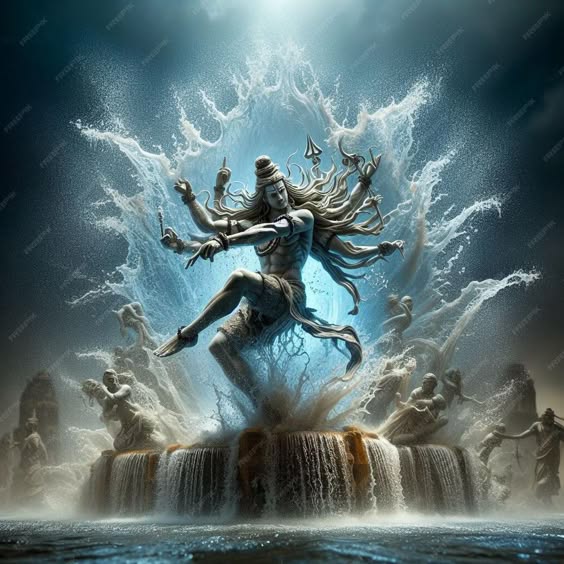
The Bhagavad Gita reminds us:
“Whenever righteousness falters and unrighteousness rises, I manifest myself.”
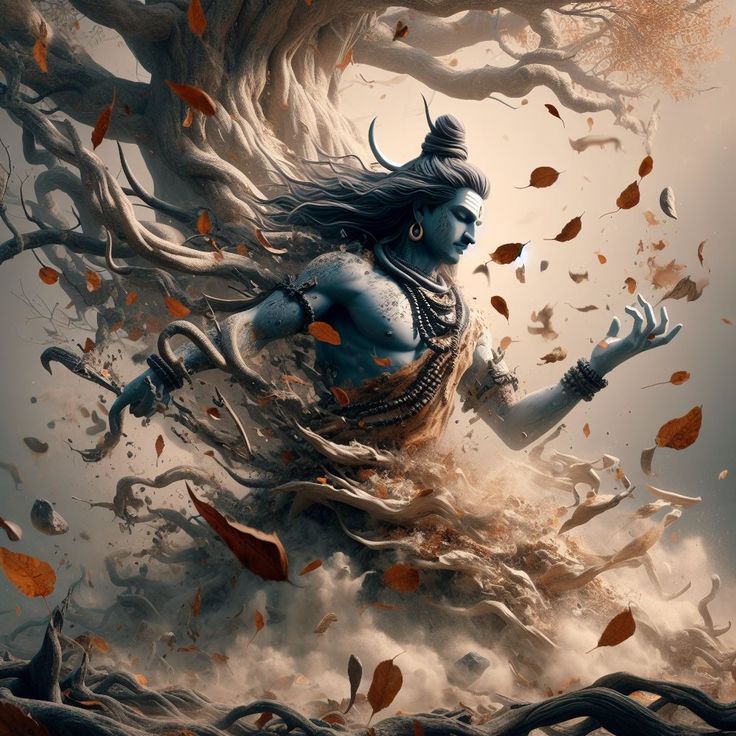
Through Lord Shiva’s steps, the old gives way,
As night dissolves in the light of day.

The crescent moon rests on His brow,
A symbol of change that all must allow.
Through unbound hair, the Ganga flows,
Where life is born and wisdom grows.
The river’s waters cleanse and free,
Merging souls with eternity.
Lord Brahma creates, Lord Vishnu sustains,
But Lord Shiva’s dance breaks the chains.
Time contracts beneath his will,
Yet through destruction, life stands still.
For Lord Shiva sways in endless bliss,
Where all is one, and nothing is amiss.
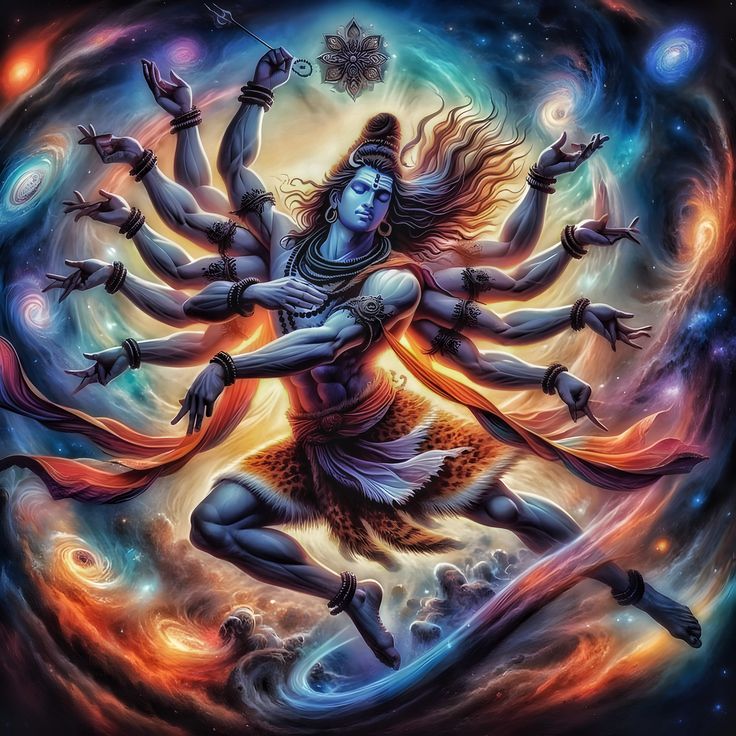
When the drumbeat halts, and silence falls,
The cosmos folds, beyond all walls.
“Neti Neti” — Not this, nor that,
The formless one moves beyond thought’s map.
Though universes sink to rest,
Within the Self, all things are blessed.
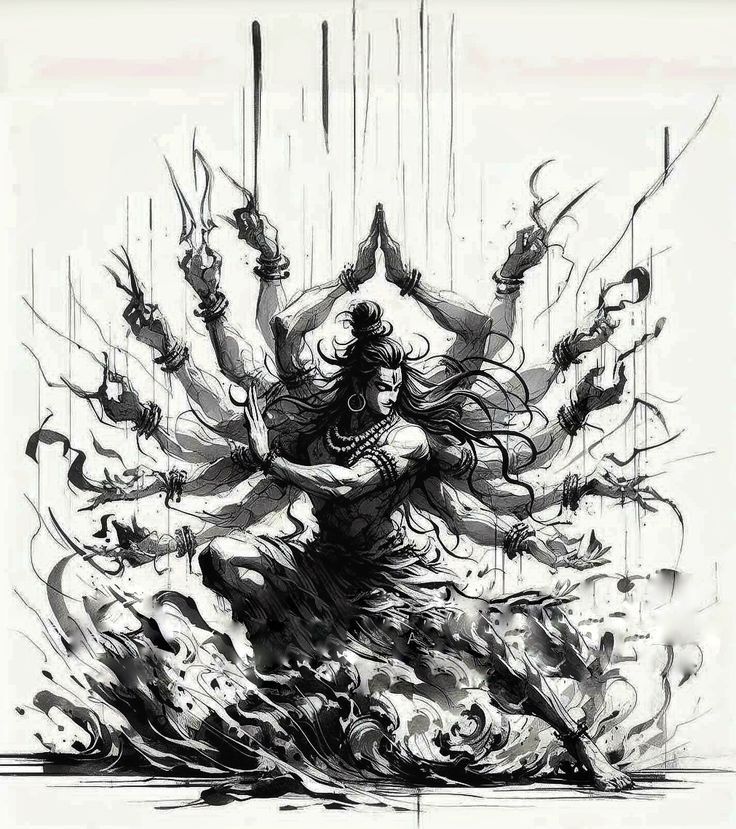
Fear not the dark, nor life’s decay,
For night must pass to birth the day.
And so, we join His dance unbound,
In joy, in loss, in every sound.
Each breath aligns with his cosmic song,
Through every end, we move along.
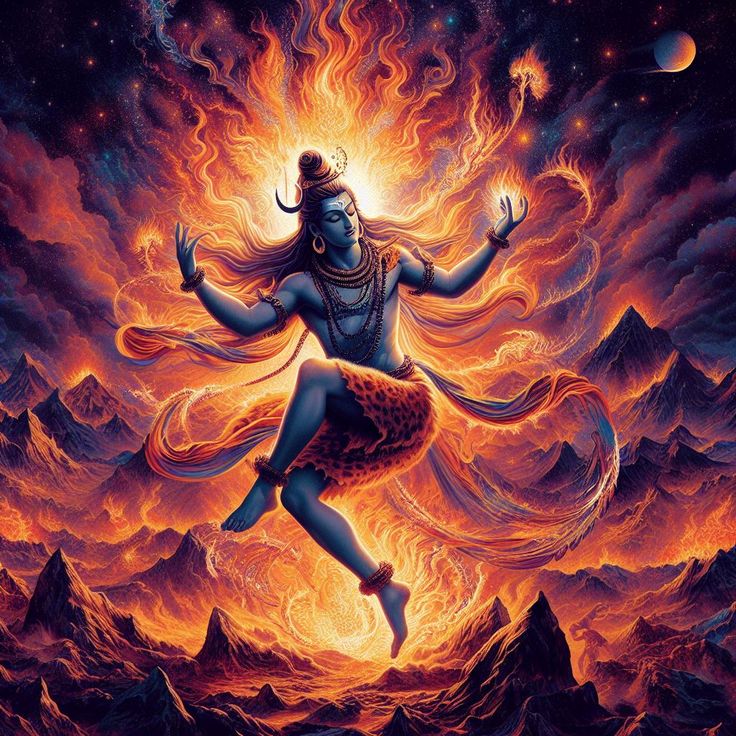
Lord Shiva’s Tandava is not just a dance; it is the rhythm of the universe itself. Through creation and destruction, He reveals the impermanence of all things, inviting us to move beyond illusion and discover the eternal Self. The crushing of the demon Apasmara reminds us that liberation is found in the annihilation of ignorance, while His raised foot offers the path to salvation. His dance teaches that every ending contains a new beginning, and every loss carries the potential for renewal.
In the cosmic play of Nataraja, we find not just the destruction of form but also the liberation of the soul. The rhythm of life flows through his movements, guiding all beings to transcend fear and surrender to the divine.
The Shvetashvatara Upanishad proclaims:
“He alone is the God of Gods, and none beside Him is the cause of the world’s existence and dissolution.”
May we awaken to this truth and dance freely with Lord Shiva’s rhythm, fearless and unbound.
Om Namah Shivaya.
Relevant Shlokas and Their Meanings
Mandukya Upanishad (1.1):
ॐ इत्येतदक्षरमिदं सर्वं तस्योपव्याख्यानं भूतं भवद्भविष्यदिति सर्वमोंकार एव।
Aum ity etad akṣaram idaṁ sarvaṁ, tasyopavyākhyānaṁ bhūtaṁ bhavad bhaviṣyad iti sarvam oṁkāra eva.
Meaning:
Aum is the imperishable sound, the essence of the Self. It encompasses the past, present, and future, and transcends them all. In Lord Shiva’s dance, this vibration pulses through creation, preservation, and dissolution, echoing the truth that all life flows from the same divine source.
Shvetashvatara Upanishad (6.11):
एको देवः सर्वभूतेषु गूढः सर्वव्यापी सर्वभूतान्तरात्मा।
Eko devaḥ sarva-bhūteṣu gūḍhaḥ sarva-vyāpī sarva-bhūtāntarātmā.
Meaning:
The One God, hidden within all beings, pervades everything as the inner Self. Lord Shiva, beyond name and form, dances through all of existence, revealing the eternal presence within every soul.
Bhagavad Gita (4.7-8):
यदा यदा हि धर्मस्य ग्लानिर्भवति भारत। अभ्युत्थानमधर्मस्य तदात्मानं सृजाम्यहम्।।
Yadā yadā hi dharmasya glānir bhavati bhārata, abhyutthānam adharmasya tad ātmānaṁ sṛjāmy aham.
Meaning:
Whenever righteousness declines and unrighteousness rises, I manifest myself. Lord Shiva’s dance reflects this principle, as every act of destruction clears the way for renewal, ensuring the universe remains in balance.
Shiva Tandava Stotra:
जटाटवीगलज्जलप्रवाहपावितस्मितं,
जितेन्द्रियं सदा रुद्रं महादेवमीडेहम्।।
Jaṭāṭavī-gala-jjala-pravāha-pāvita-smitaṁ,
Jitendriyaṁ sadā rudraṁ mahādevam īḍeham.
Meaning:
I meditate upon Lord Shiva, The great God, who is adorned with matted hair, whose flow of water is pure and who possesses control over His senses. His divine presence purifies the world.
The Shiva Tandava Stotra is a powerful hymn composed by the demon king Ravana, who is known for his devotion to Lord Shiva. This stotra celebrates the divine dance of Lord Shiva, particularly His Tandava, which embodies the cosmic cycles of creation, preservation, and destruction.
In this hymn, Ravana poetically describes Lord Shiva’s majestic form, His attributes, and the dynamic nature of His cosmic dance. Each verse is imbued with intense devotion and reverence, highlighting the destructive and regenerative powers of Lord Shiva. The stotra serves not only as a means of worship but also as an expression of the devotee’s surrender to the divine.
Chanting the Shiva Tandava Stotra is believed to invoke Lord Shiva’s grace, bestowing strength, protection, and enlightenment upon the devotee. The rhythmic cadence of the stotra echoes the dance of creation and destruction, encapsulating the essence of Lord Shiva’s divine play. Through this hymn, devotees seek to connect with the profound spiritual energy of Lord Shiva, transcending the limitations of the material world.
Mahamrityunjaya Mantra:
ॐ त्र्यम्बकं यजामहे सुगन्धिं पुष्टिवर्धनम्।
उर्वारुकमिव बन्धनान्मृत्योर्मुक्षीय माऽमृतात्।।
Om tryambakaṁ yajāmahe sugandhiṁ puṣṭi-vardhanam.
Urvārukam iva bandhanān mṛtyor mukṣīya mā’mṛtāt.
Meaning:
We meditate on the Three-Eyed One (Lord Shiva), who permeates and nourishes all like a fragrance. May he liberate us from the bondage of death and grant us immortality.
The Mahamrityunjaya Mantra, also known as the Tryambakam Mantra, is one of the most revered verses in Hinduism, found in the Rig Veda (7.59.12). This powerful mantra is dedicated to Lord Shiva, specifically in His aspect as the conqueror of death and the giver of immortality. The mantra invokes the divine energy of Lord Shiva to bestow protection, healing, and rejuvenation upon the devotee.
Chanting the Mahamrityunjaya Mantra is believed to have profound spiritual and psychological benefits. It is said to alleviate fears of death, grant strength in times of adversity, and promote overall well-being. The mantra serves as a reminder of the transient nature of life, encouraging individuals to transcend the material world and seek the eternal truth of the Self (Atman).
In times of illness or distress, devotees often recite this mantra to invoke divine grace for healing and to ward off negative energies. The mantra’s essence lies in its ability to connect the devotee with the supreme consciousness, fostering a sense of peace and resilience amidst the trials of life.
Glossary
- Lord Nataraj: Lord Shiva as the cosmic dancer, symbolizing the balance of creation and destruction, embodying the eternal rhythm of the universe and the interplay of opposites, where dance becomes a form of worship, and movement reflects the divine energy that sustains all existence.
- Tandava: The cosmic dance of Lord Shiva, signifying the intricate cycles of creation, preservation, and destruction in the universe, revealing the profound relationship between existence and the divine.
- Aum/Om: The sacred sound that signifies the essence of the Self and the universe, often considered the primordial sound from which all creation emanates. Aum is a powerful mantra commonly used in meditation and spiritual practices, believed to vibrate at the frequency of the cosmos, thus connecting practitioners with divine consciousness.
- Serpent: Vasuki, the serpent, is a significant figure in Hindu mythology, often depicted coiled around Lord Shiva’s neck. This association symbolizes the divine control of the primal forces of nature, as represented by the snake. Vasuki is also the king of Nagas, a race of serpents, and plays a crucial role in the churning of the cosmic ocean, a mythological event that led to the creation of various divine elements.
- Abhaya Mudra: A gesture symbolizing fearlessness and protection, often depicted in various forms of art and sculpture, representing the calm and composure of the individual who embodies this mudra, providing reassurance both to the practitioner and those around them.
- Vedas: The Vedas are the oldest and most revered scriptures in Hinduism. They are considered to be the eternal knowledge revealed to humanity by divine beings. There are four main Vedas: Rigveda, Samaveda, Yajurveda, and Atharvaveda. Each Veda is divided into different parts, including hymns, rituals, and philosophical discussions.
- Upanishads: The Upanishads are philosophical texts that form part of the Vedas. They delve into the deeper meanings of the Vedic hymns and explore the nature of reality, consciousness, and the soul. The Upanishads are known for their profound insights and their influence on various philosophical traditions, including Buddhism and Jainism.
- Puranas: The Upanishads are philosophical texts that form part of the Vedas. They delve into the deeper meanings of the Vedic hymns and explore the nature of reality, consciousness, and the soul. The Upanishads are known for their profound insights and their influence on various philosophical traditions, including Buddhism and Jainism.
- Brihadaranyaka Upanishad: The Brihadaranyaka Upanishad is one of the longest and most comprehensive of the ancient Indian philosophical texts known as the Upanishads. It is part of the Taittiriya Samhita of the Yajurveda. The Upanishad explores a wide range of philosophical and spiritual topics, including the nature of Brahman, the ultimate reality, the nature of the soul, and the path to liberation. It is famous for its dialogues between Yajnavalkya and Maitreyi, in which Yajnavalkya explains the nature of Brahman and the path to liberation.
- Mandukya Upanishad: The Mandukya Upanishad delves into the profound nature of consciousness, asserting that the ultimate reality, Brahman, is the underlying essence of all existence. It explores the four states of consciousness, each representing a different level of awareness: wakefulness, dream, deep sleep, and transcendental. The Upanishad ultimately suggests that by transcending the limitations of these states, one can attain enlightenment and realize their true nature as part of the universal consciousness.
- Shvetashvatara Upanishad: The Shvetashvatara Upanishad is a significant Upanishad that explores the nature of Brahman, the ultimate reality, and the path to liberation. It is known for its detailed descriptions of the cosmic cycle, the creation of the universe, and the nature of the soul. The Upanishad also discusses the concept of the inner light, which is seen as a symbol of spiritual enlightenment. It is one of the few Upanishads that explicitly mention the Purusha, the cosmic person, and the Prakriti, the primordial matter.
- Bhagavad Gita: The Bhagavad Gita is a Hindu scripture that is part of the Mahabharata. It is considered one of the most important religious texts in Hinduism. The Gita is a dialogue between the warrior Arjuna and his charioteer Krishna, who is an avatar of the Hindu god Vishnu. In the Gita, Krishna teaches Arjuna the path to righteousness, devotion, and spiritual liberation. The text is filled with profound philosophical and spiritual insights, and it has had a profound influence on Indian culture and thought.
- The Holy River Ganga: The sacred river Ganges, which flows from Lord Shiva’s hair, symbolizing purity and the flow of life. The legend of the Holy River Ganga is a significant narrative within Hindu religious texts, carrying deep spiritual and cultural significance. This has been revered by Hindus for centuries, often interpreted as a symbol of divine grace and purification. Western scientists are now accepting that water on our planet came from extraterrestrial sources, a fact that Hindu scientists knew aeons ago.
- Apasmara: The demon of ignorance, who represents the age-old battle against ignorance, trampled under Lord Shiva’s foot, symbolizing the triumph of wisdom and enlightenment over dark forces.
- Damaru: A small drum symbolizing the sound of creation.
- Naada Brahma: The profound concept that sound is the very essence of the universe, intertwining with the fabric of reality. It emphasizes the idea that all of creation vibrates with a cosmic resonance, reflecting the interconnectedness of all beings and elements within the cosmos.
- Neti Neti: A Sanskrit phrase meaning “not this, not that,” expressing the transcendence of Brahman beyond all forms.
- Lord Rudra: An ancient Vedic name for Lord Shiva, often associated with storms, wind, and destruction in Hindu mythology. This powerful deity embodies the raw, untamed forces of nature and is revered for his ability to both create and obliterate, reflecting the duality of existence itself. His presence is invoked in rituals to seek protection and solace during turbulent times, emphasizing the importance of balance in the cosmic order.
- Lord Brahma: The creator deity in Hinduism, responsible for the creation of the universe and all living beings, often depicted with four faces representing the four Vedas, symbolizing his omnipresence and omniscience, and is revered as the source of all knowledge and creativity across various traditions and texts within Hindu philosophy.
- Lord Vishnu: The preserver deity in Hinduism, responsible for maintaining the order and harmony of the universe, often depicted as a blue-skinned figure who embodies mercy and goodness, ensuring the stability of creation by preserving dharma (cosmic order) during times of chaos and turmoil.
- Mahamrityunjaya Mantra: A powerful mantra dedicated to Lord Shiva, invoking protection from death and granting healing and rejuvenation to the devotee.
- Shiva Tandava Stotra: A hymn composed by Ravana, celebrating Lord Shiva’s cosmic dance, emphasizing his dual nature of creation and destruction, and invoking his grace and strength.
- Ashes: In Hinduism, ashes symbolise the transient nature of life, serving as a poignant reminder of mortality and the impermanence of the physical body. Hindus cremate theirThey represent the cycle of creation and destruction, reflecting the belief that the soul (Atman) is eternal, while the body is temporary. Ashes are also associated with purification, renunciation, and the divine connection to Lord Shiva, who embodies detachment from worldly attachments. Furthermore, the ashes of the deceased are treated with reverence, as they are believed to facilitate the liberation of the soul and its return to the cosmic elements, emphasizing the interconnectedness of life, death, and rebirth. (Please scroll down for a more detailed explanation).
Lord Nataraj and His Dance of Creation
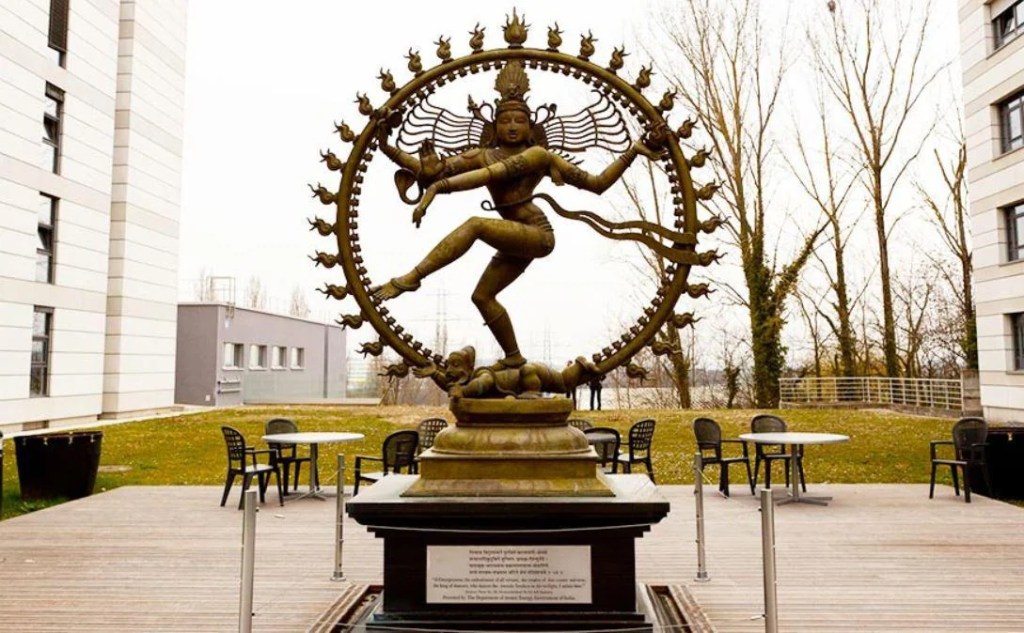
In 1975, physicist Dr. Fritjof Capra published The Tao of Physics, a book that explored connections between Hindu philosophy and modern science. One of the key points he discussed was the resemblance between the dance of Lord Shiva, symbolizing creation and destruction, and the principles of interconnectedness found in quantum physics.
Lord Shiva’s dance represents the dynamic forces shaping the universe, much like how quantum physics describes the behaviour of particles on a tiny scale. Capra suggested that both Lord Shiva’s dance and quantum physics reveal a fundamental interconnectedness in the cosmos.
By drawing parallels between ancient Hindu philosophy and cutting-edge science, Capra’s work sparked discussions about the relationship between spirituality and scientific understanding. This idea invites people to contemplate the deeper mysteries of existence and how different belief systems might intersect with scientific inquiry.
Additionally, the Nataraj form of Lord Shiva is often associated with the concept of entropy in thermodynamics. Entropy refers to the measure of disorder or randomness in a system. Lord Shiva’s dance represents the constant cycle of creation and destruction, which is inherently tied to the concept of entropy. The dance signifies the transformation of order into chaos and the subsequent formation of new order, reflecting the principles of entropy in the natural world.
The Nataraj dance also symbolises the harmony between science and spirituality. It highlights the interconnectedness of the physical and metaphysical realms, demonstrating that scientific principles can be found in the divine and spiritual dimensions of existence.
Throughout history, Western scientists have appropriated Indian discoveries thousands of years old as their own, often without acknowledging their true origins. This utter ripping off of knowledge extends to all spheres of science, including geology, astronomy, medicine, biology, astrology, mathematics, agriculture, flaura, fauna, linguistics, and just about anything that comes to mind. This appropriation has contributed to a cultural bias that undervalues the contributions of ancient Indian civilizations to the development of knowledge and technology.
Western colonial powers actively sought to discredit and undermine Hindu scriptures. This was often done through:
- Selective translations: Translations that emphasized the fantastical elements while downplaying the philosophical and spiritual aspects.
- Mischaracterization: Portraying Hindu deities as mere idols and rituals as superstition, rather than symbols of deeper spiritual concepts.
- Denigration: Labeling Hindu scriptures as “mythological” or “primitive,” implying they were inferior to Western religious and philosophical texts.
This was a deliberate strategy to:
- Justify colonial rule: By suggesting that Western civilization was superior and had a duty to “civilize” the East.
- Promote religious conversions: To weaken the foundations of Hinduism and make it easier to convert Hindus to Christianity.
- Perpetuate cultural superiority: To reinforce the idea that Western culture was more advanced and rational than Eastern cultures.
While it’s important to acknowledge the historical context and the biases of colonial scholars, it’s equally important to recognize the harm caused by these actions. The legacy of this colonial propaganda continues to influence perceptions of Hinduism today.
I would not be incorrect when I state that Christianity and Islam are merely doctrines for world domination and not religions. They have jointly and severally destroyed countless civilisations and cultures since they came into being. A lot more can be said but I leave that for several other posts which will address this burning topic. The history of the duo is toxic and not at all pardonable. Anyone who chooses to contradict my stand must read history without bias and the truth will dawn upon them.
Aum: The Cosmic Sound
Aum or Om is a sacred syllable in Hinduism & Jainism. It is often referred to as the “Pranava,” meaning the sound of the divine.
The Symbolism of Aum
The Aum symbol is typically depicted as a combination of three curves:
- A (अ): Represents creation and the waking state.
- U (उ): Represents preservation and the dream state.
- M (म): Represents dissolution and the deep sleep state.
The horizontal line at the bottom represents the ultimate reality or Brahman.
The Western scientific Connection
While ancient Hindu scriptures have long extolled the spiritual significance of Aum, modern scientists have begun to explore its acoustic properties and potential connections to the human brain and consciousness.
Here are some of the findings:
- Resonant Frequency: Studies have shown that the Aum sound resonates at a frequency that is believed to be conducive to meditation and relaxation.
- Brainwave Synchronization: Some research suggests that chanting Aum can help synchronize brainwaves, leading to a state of deep focus and inner peace.
- Quantum Physics: There are intriguing parallels between the concept of Aum as the primordial sound and the quantum theory of vibrations and energy fields.
bitter Pill For Western Supremacists…
Scientific Evidence Supporting Aum as the Sound of Creation
Here are some of the key findings that suggest Aum is a universal resonance:
- Cosmic Microwave Background Radiation: This residual radiation from the Big Bang, often referred to as the “echo of creation,” has been analyzed to reveal a specific frequency pattern that aligns with the Aum sound.
- Quantum Physics: Studies in quantum mechanics have shown that the universe is fundamentally composed of vibrations and energy fields. The Aum sound, as a vibration, could be seen as a manifestation of this underlying cosmic energy.
- Neuroscience: Research has demonstrated that the Aum sound can induce specific brainwave patterns associated with deep meditation and altered states of consciousness, suggesting a connection to the fundamental nature of reality.
In conclusion, while modern science is beginning to uncover the acoustic and neurological aspects of Aum, its true essence remains rooted in the Hindu spiritual traditions that have revered it for millennia.
Aum and the Ancient Indian Civilization
The concept of Aum and its profound significance is deeply rooted in the rich and ancient Indian civilization. This civilization, renowned for its intellectual and spiritual achievements, flourished at a time when many parts of the world were still in relatively primitive stages of development.
While Europe was largely inhabited by nomadic tribes or small, agrarian settlements, ancient India was home to sophisticated urban centers with planned layouts, advanced sanitation systems, and intricate architectural marvels. Cities like Harappa and Mohenjo-daro, dating back thousands of years, provide evidence of a highly organized and technologically advanced society. Varanasi is said to be the oldest continuously inhabited city in the world. It is the city of Lord Shiva.
The development of such a civilisation provided the fertile ground for the emergence of profound philosophical and spiritual ideas, including the concept of Aum. This sacred syllable, representing the ultimate reality and the cosmic sound of creation, is a testament to the intellectual depth and spiritual insights of the ancient Indians.
It is within this context that we can fully appreciate the significance of Aum as a fundamental resonance of the universe. This concept, rooted in a civilization that was far ahead of its time, offers a profound perspective on the nature of reality and our place within it.
It is also a fact that followers of Christianity and Islam, the two doctrines for world domination have demonically done their utter worst to destroy the Indian Civilisation. The Indian people have lost a large part of their heritage and self respect but are now working to regain lost glory while countless other civilisations across the globe have been wiped out of existence by the evil duo.
Karma is a bitch. It always bites back and hard!
Ashes and Their Significance in the Context of Lord Shiva
In Hinduism, ashes, or “bhasma,” hold profound spiritual significance, particularly in relation to Lord Shiva. They symbolise the impermanence of material existence, the ultimate dissolution of the individual self, and the journey towards liberation from the cycle of birth, death, and rebirth.
The Symbolism of Ashes
- Impermanence: Ashes represent the transitory nature of the physical body. They serve as a stark reminder that all material things are subject to decay and destruction.
- Dissolution of the Self: The dissolution of the body into ashes is seen as a metaphor for the dissolution of the individual ego. This is central to the Hindu philosophy of Advaita Vedanta, which posits that the individual soul (Atman) is ultimately identical to the universal consciousness (Brahman).
- Liberation: The offering of ashes to Shiva is seen as a symbolic surrender to the transformative process of death and rebirth. It signifies a desire for liberation from the cycle of samsara and a merging with the divine.
Lord Shiva and Ashes
Lord Shiva, often depicted as a yogi or ascetic, is closely associated with death and destruction. However, his role is not one of mere annihilation. He is seen as the transformative force that breaks down the old to make way for the new.
- Presiding Deity of Cremation Grounds: Lord Shiva is often associated with cremation grounds (smashanas). This symbolism highlights His role as the guide and facilitator of the spiritual journey towards liberation.
- Acceptance of Death: The offering of ashes to Lord Shiva is seen as an acceptance of the inevitability of death and a surrender to the divine will.
- Transformation: Lord Shiva’s role is not just to destroy but also to transform. The ashes, representing the dissolution of the ego, are offered to him as a symbol of faith in his ability to guide the soul towards liberation.
Scriptural References
The significance of ashes is deeply rooted in Hindu scriptures. The Vedas, Upanishads, Bhagavad Gita, and Puranas offer insights into the symbolism of ashes and their connection to Lord Shiva.
- Rig Veda: Mentions the scattering of ashes in the waters as a purification ritual.
- Chandogya Upanishad: Uses the metaphor of a salt doll dissolving in water to illustrate the ultimate unity of the individual soul with the universal consciousness.
- Bhagavad Gita: Teaches that the body is perishable, while the soul is eternal.
- Lord Shiva Purana: Details the significance of offering ashes to Lord Shiva as a means of purification and liberation.
In conclusion, ashes in Hinduism hold profound spiritual significance, symbolizing impermanence, dissolution, and the journey towards liberation. Lord Shiva, as the presiding deity of cremation grounds and the transformative force, is intimately connected with the symbolism of ashes. The offering of ashes to Lord Shiva is seen as a powerful act of surrender, faith, and aspiration for spiritual freedom.


 Addy's Verse
Leave a reply to satyam rastogi Cancel reply