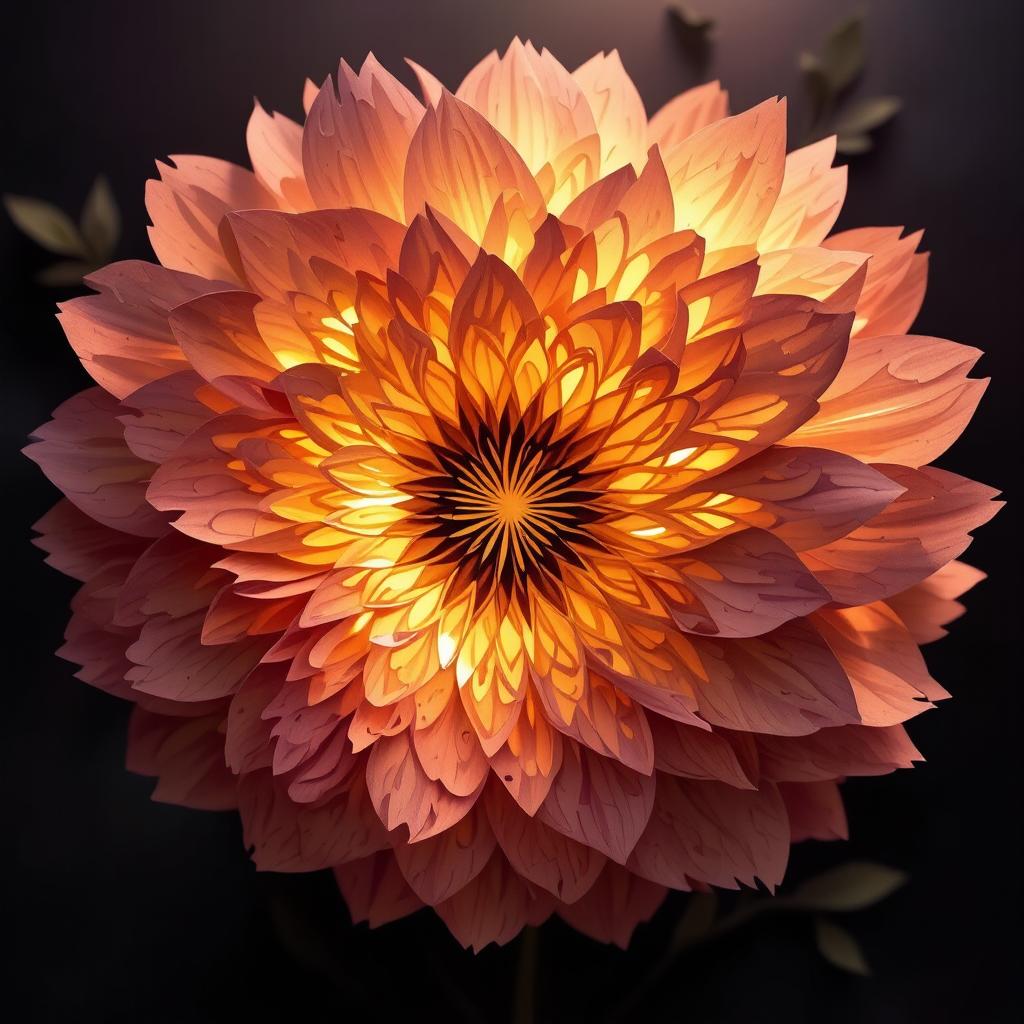

What appears delicate may veil the fiercest truth…. not in contrast, but in concealment. The many-layered beauty of this world is not its reality, but its disguise: a luminous play of Maya, concealing the eternal Brahman that shines as all. This poem is not about the seen, but about the Seer……. the Self behind appearances. Creation is not a becoming, but the unveiling of what is. The petals of experience fold outward, but the flame at the core remains unmoved, untouched. This is not metaphor. This is Sat-Chit-Ananda…… Being, Consciousness, Bliss.

That which opens does not move….
It is the Self, still, beyond all change,
As Prakriti dances outward,
In folds of thought and layered name.

The center does not begin,
Nor does it end, nor come, nor go.
It is the Brahman, ever One,
Where words dissolve, and silence knows.
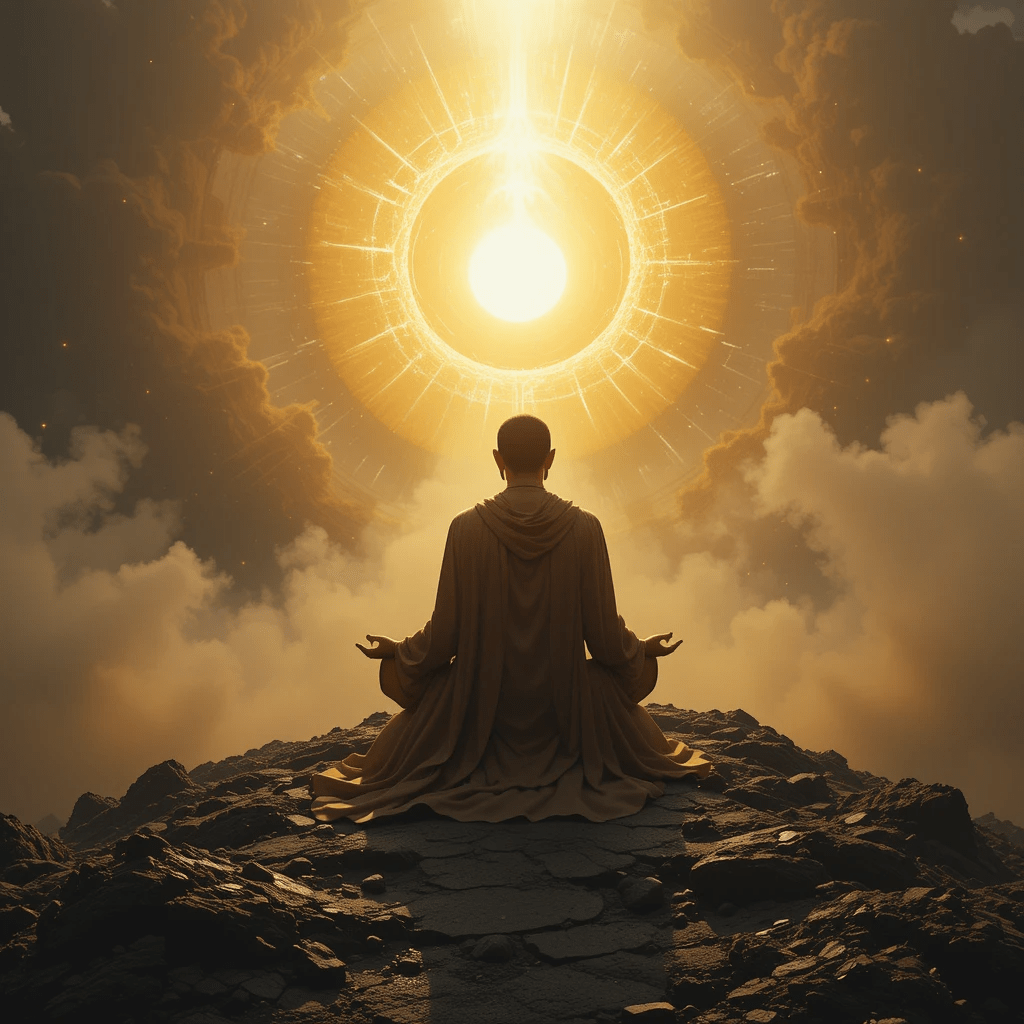
Light is born in silent Self……
The ache of form to know the formless.
Not god, not man, not separate soul,
But Atman, whole, and ever homeless.

The world is not its own design,
But glows with That which seeks not showing.
Maya veils the deathless flame,
Yet cannot dim its ceaseless glowing.

You knew this once…… not as a child,
But when no “I” had yet arisen.
A gaze unmoved, a Witness pure,
Unbound by time, untouched by prison.

Beauty breaks where Truth escapes…..
A crack in form, the flame of grace.
Let the knower burn to ash.
Let the known lose name and face.
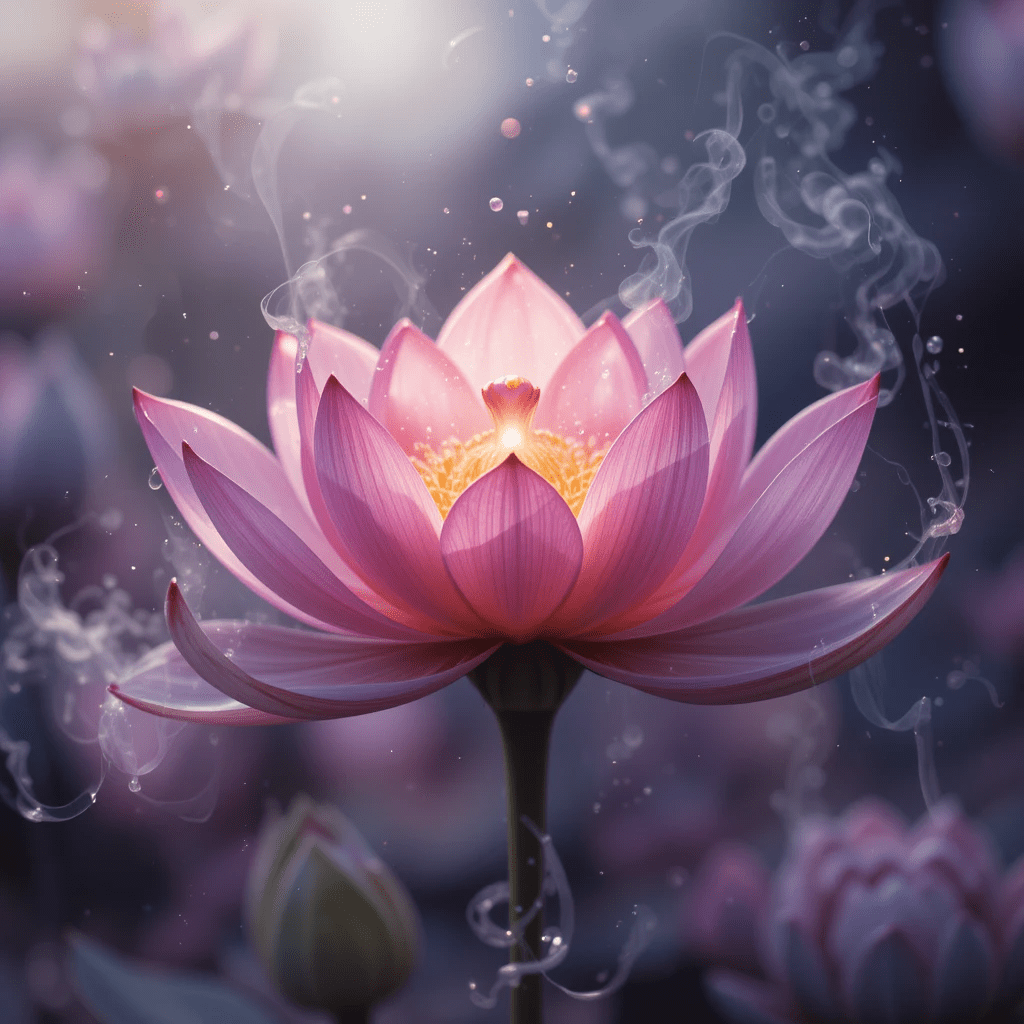
What reveals itself is not new….. it is remembered. The Self, the Atman, is not discovered in time, but uncovered in awareness. The bloom is not a growth but a return……. an inward collapse of illusion into what always was. Let beauty lead not to admiration but to dissolution. In Vedanta, this is moksha: not escape, but the recognition that there was nothing to escape from. All that remains is the fire…… not of destruction, but of truth, burning gently at the heart of Being.
Glossary of Vedantic Terms
Atman (आत्मन्)
The innermost Self or soul, pure consciousness. In Advaita Vedanta, it is identical with Brahman, the ultimate reality. The Atman is not the individual ego but the unchanging witness beyond mind and body.
Brahman (ब्रह्मन्)
The formless, infinite, eternal essence of all that exists….. pure Being, Consciousness, and Bliss (Sat-Chit-Ananda). It is not a deity but the impersonal Absolute, beyond attributes and limitations.
Maya (माया)
The cosmic illusion that makes the One appear as many. It is the power by which the unchanging Brahman appears as the changing universe. Maya veils the truth, creating the experience of duality and separation.
Sat-Chit-Ananda (सच्चिदानन्द)
A compound expression describing the nature of Brahman:
- Sat – pure Being or existence
- Chit – pure Consciousness
- Ananda – pure Bliss
These three are not attributes but intrinsic to the essence of Brahman.
Neti-neti (नेति नेति)
A meditative practice of negation used in Vedanta, meaning “not this, not this.” It is the process of discarding all that is not the Self…. body, mind, emotions, and thoughts……. to arrive at the true Self.
Prakriti (प्रकृति)
The primordial material nature or cosmic energy from which all forms emerge. In Vedanta and Sankhya, Prakriti is the changing aspect of reality, contrasted with the unchanging Purusha or Self.
Jnana (ज्ञान)
Spiritual knowledge or wisdom. In Vedanta, it refers specifically to Self-knowledge……. the direct realization of the unity of Atman and Brahman. The path of Jnana Yoga involves inquiry, contemplation, and discernment.
Moksha (मोक्ष)
Liberation or spiritual freedom…… the release from the cycle of birth and death (samsara). Moksha is attained through realization of the Self as non-different from Brahman, ending all suffering and illusion.
Witness (Sākṣin / साक्षिन्)
A term often used in Vedantic thought to describe the Atman as the unchanging observer of all experiences. It is the silent awareness behind all perception and action, unaffected by them.
 Addy's Verse
Leave a comment