

The extinction of the Dodo bird symbolizes the destructive impact of human greed on nature, exemplified by the 1600s arrival of European colonizers in Mauritius, which led to overhunting, deforestation, and the introduction of invasive species. This exploitative mindset persists today, with industrial demands from countries like China further accelerating species destruction.

Both Western colonialism and modern consumer economies contribute to the extinction of many species through hunting and illegal wildlife trade, with particular emphasis on the demand for traditional medicine and exotic products. The poem illustrates a Dodo bird caring for its chick, symbolizing the grief of lost lives due to human greed and calling for a shift towards protecting rather than exploiting nature.

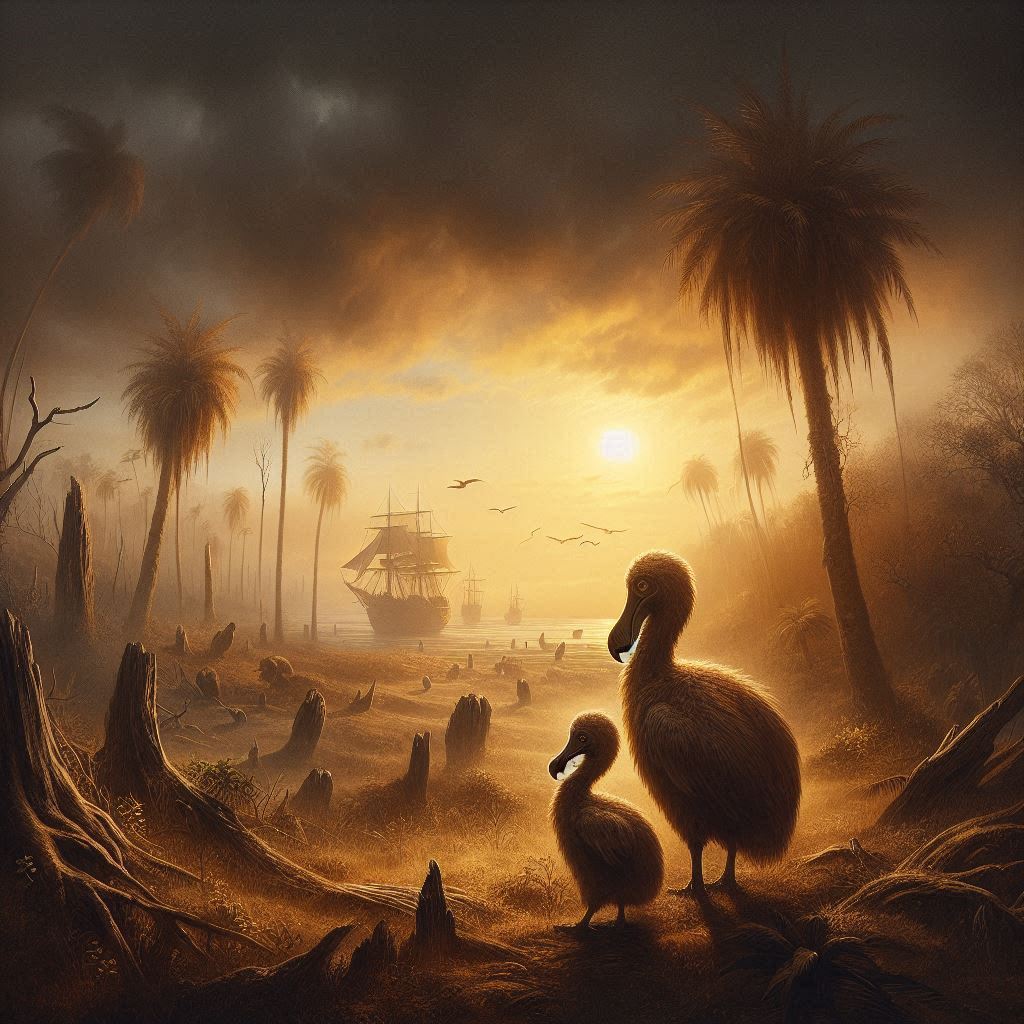
Beneath the palm trees, in twilight’s glow,
A mother dodo whispers, soft and low,
“Fly though you cannot, stay close to me,
For the world is not as kind as it seems to be.”

But footsteps gather from distant shores,
Greed in pockets, closing open doors.
With no fear, she watches them draw near;
The hunters’ hands, the price too clear.
Feathers fall like leaves from autumn’s crown,
Silent hearts, lost to a world breaking down.
In the name of hunger, profit, and gain,
A lineage ends, never to rise again.
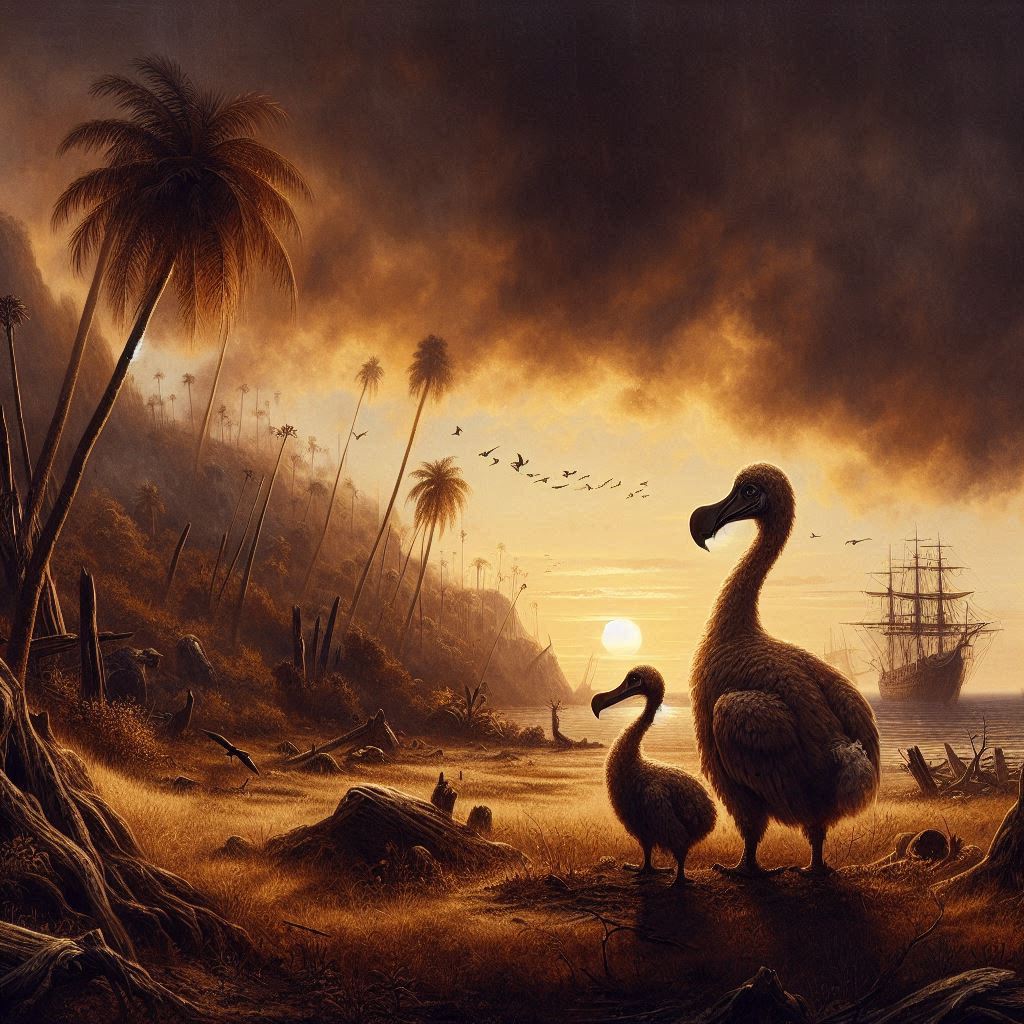
The winds will whisper tales of skies forlorn,
Of lives once bright, now dimmed and worn.
What worth has gold when songs are hushed and still?
What gain is power when hearts are cold and chill?
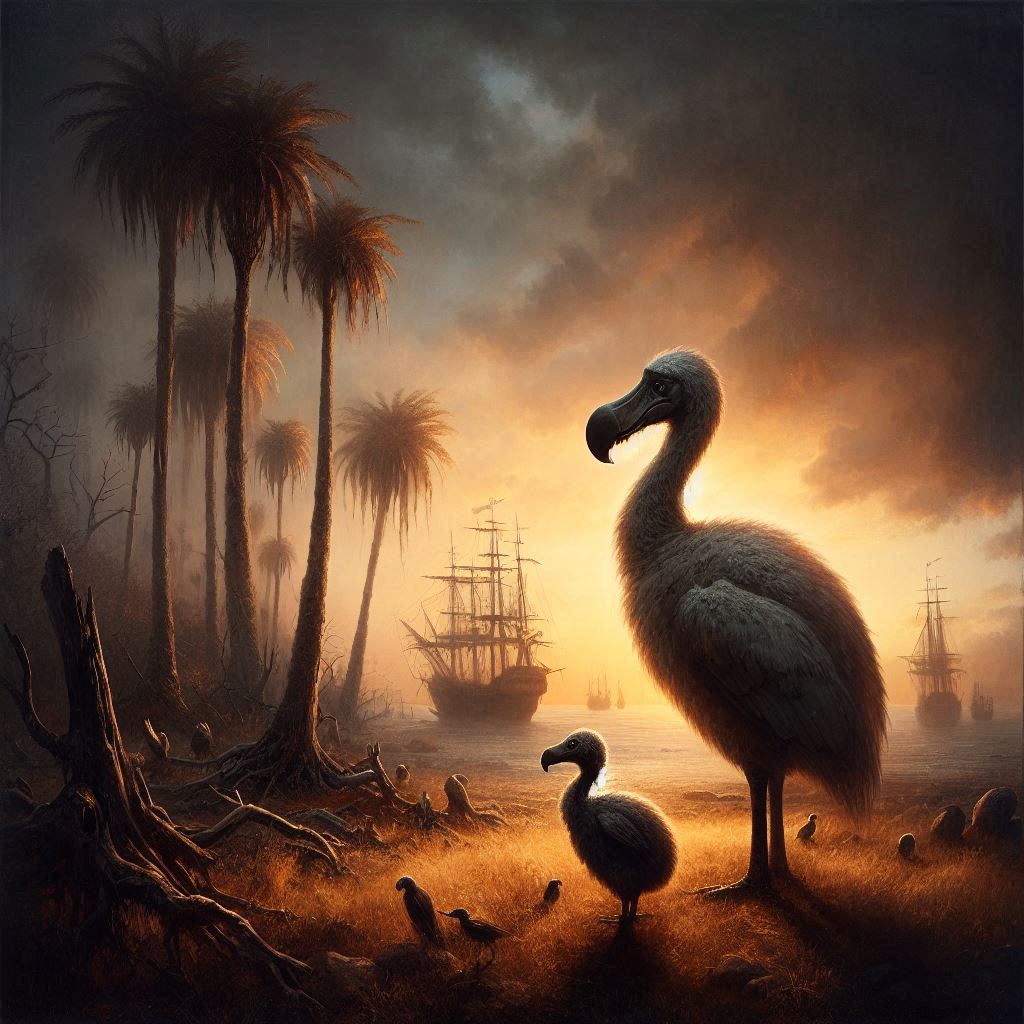
The extinction of the Dodo is part of a tragic pattern that spans centuries, a pattern of relentless exploitation driven by both colonialism and modern consumerism. European colonizers led the way, wiping out species for food, trade, and entertainment. Animals such as the great auk, passenger pigeon, and quagga were hunted to extinction during the colonial era. Forests and ecosystems were razed for plantations, mines, and settlements, displacing native species and communities alike. Today, this legacy of environmental destruction continues, especially through the industrial and economic activities fueled by China’s demand for endangered wildlife.

China is the largest market for illegal wildlife products such as rhino horns, pangolin scales, tiger parts, and ivory, which are often used for traditional medicine or as status symbols. This demand contributes to the decline of endangered species and pushes many to the brink of extinction, while habitat destruction from industrial expansion exacerbates the global environmental crisis.

Since 1500, human activities have led to the loss of approximately 680 vertebrate species, with over 1 million more currently facing extinction due to colonial exploitation and industrial demand. “A Nest of Ashes” highlights extinction as a moral failure for humanity, emphasizing that life is sacrificed for profit and luxury.

We must recognize the urgent need for change; if we persist on our damaging path, we risk being remembered as failures instead of caretakers of the Earth. We must prioritize ecological balance to create a positive legacy for future generations.


 Addy's Verse
Leave a comment