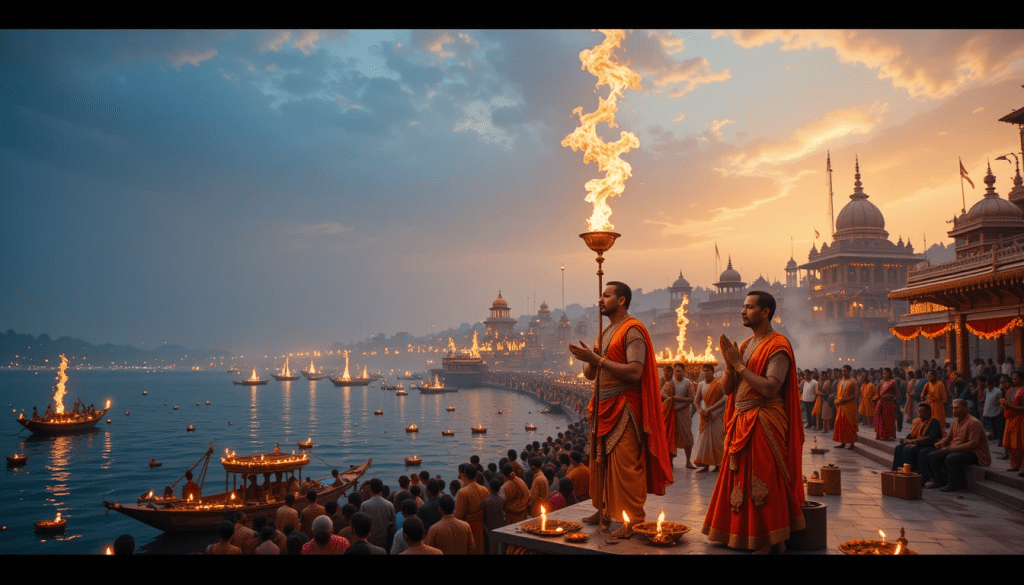
The Mahakumbh is more than a congregation; it is the heartbeat of a civilization woven in prayer and penance. Every twelve years, the Kumbh Mela draws millions like a celestial magnet, each soul carrying its burdens, sins, and aspirations. The word Kumbh symbolizes completion. Perhaps this is why self-realized saints and sages are also referred to as “Kumbh.”
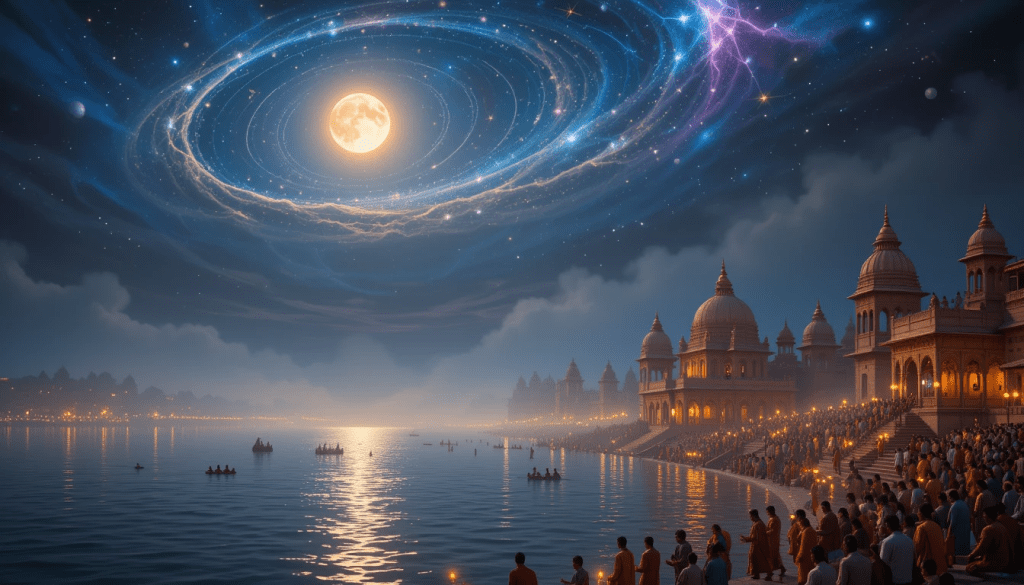
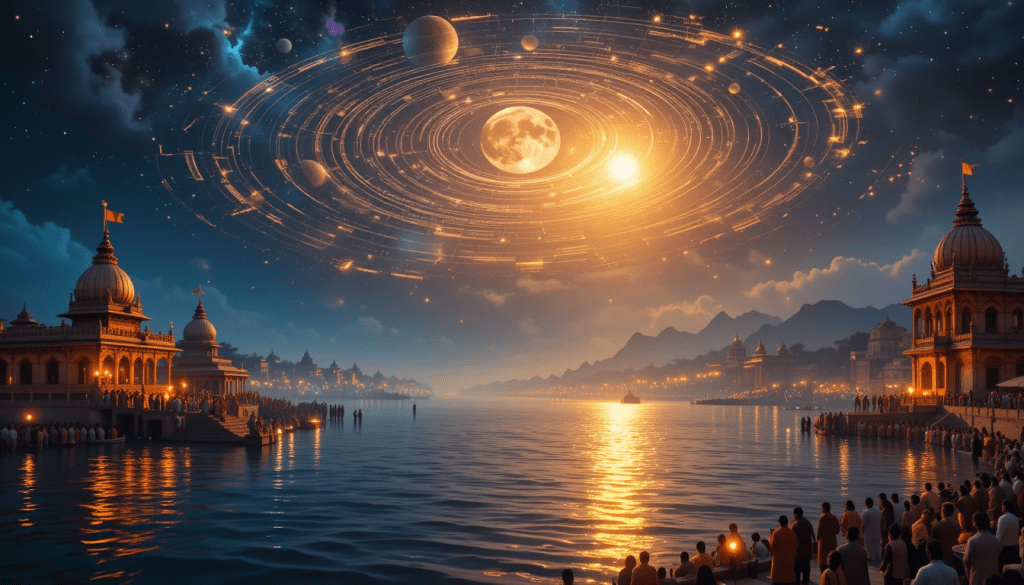
But once every 144 years, the Mahakumbh; an even rarer and grander celebration; illuminates the sacred confluence of the Ganga, Yamuna, and Saraswati. This event, aligned with planetary movements, mirrors the eternal dance of the cosmos. At the sangam; where rivers converge; time collapses, and mortals touch eternity.
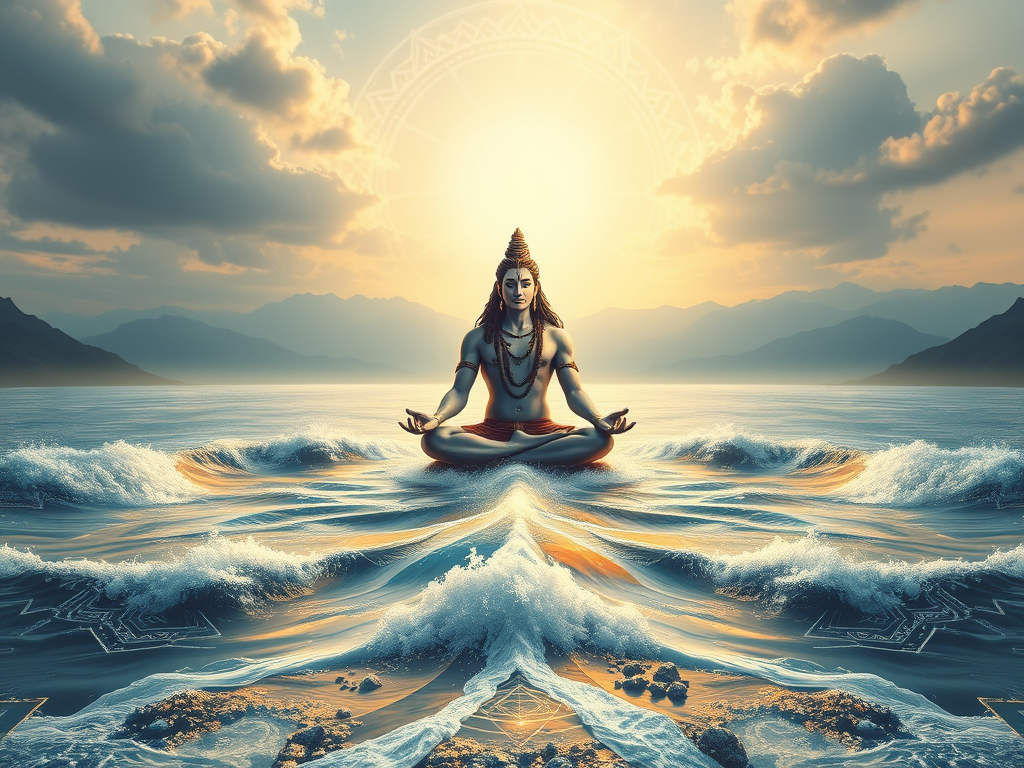
In the words of Sri Sri Ravi Shankar, “The confluence is not just of 3 rivers. It’s also the confluence of the gross, subtle, and causal bodies. The union of soul, knowledge, and Shiva principle within us. All holy places are within us. So meditation and spiritual practices are very important. Kalpavaas means to go within, transcend time, and connect with Mahakaal, the one beyond time!”
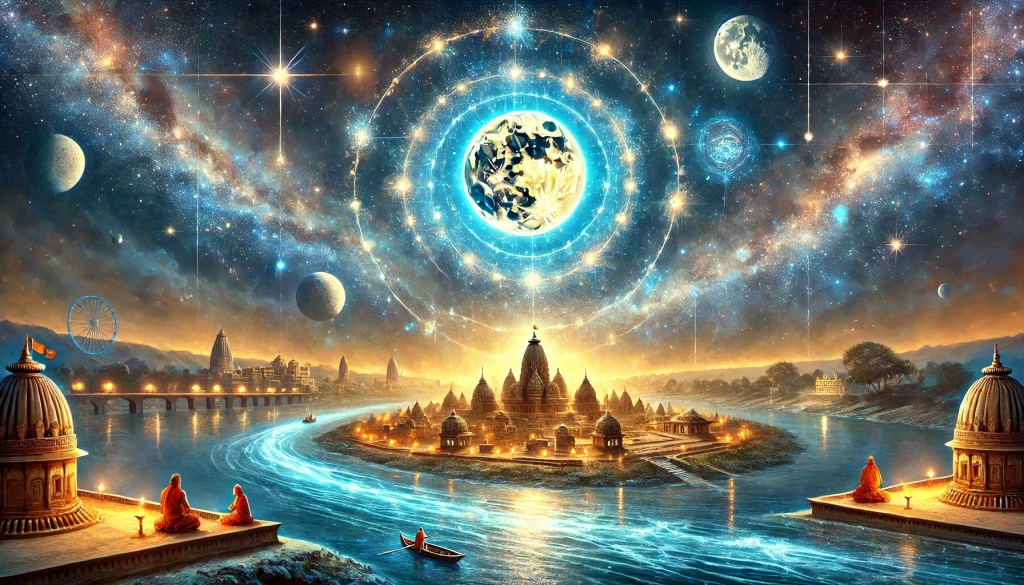
The sacred waters promise redemption, while the air vibrates with mantras that seem to unearth forgotten truths. It is a journey inward as much as outward, where one seeks not only freedom from sin but also union with the divine essence that binds all creation.
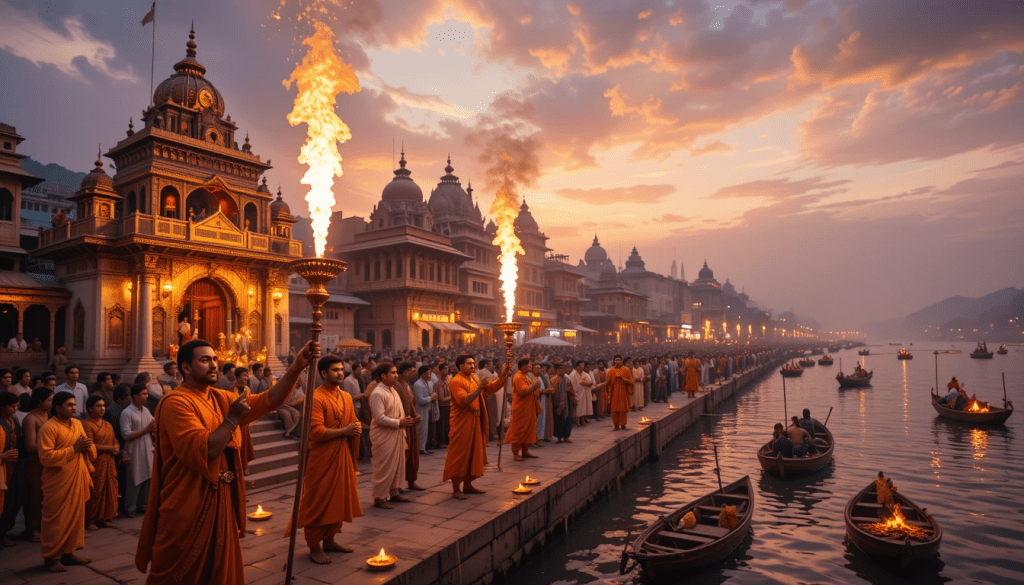
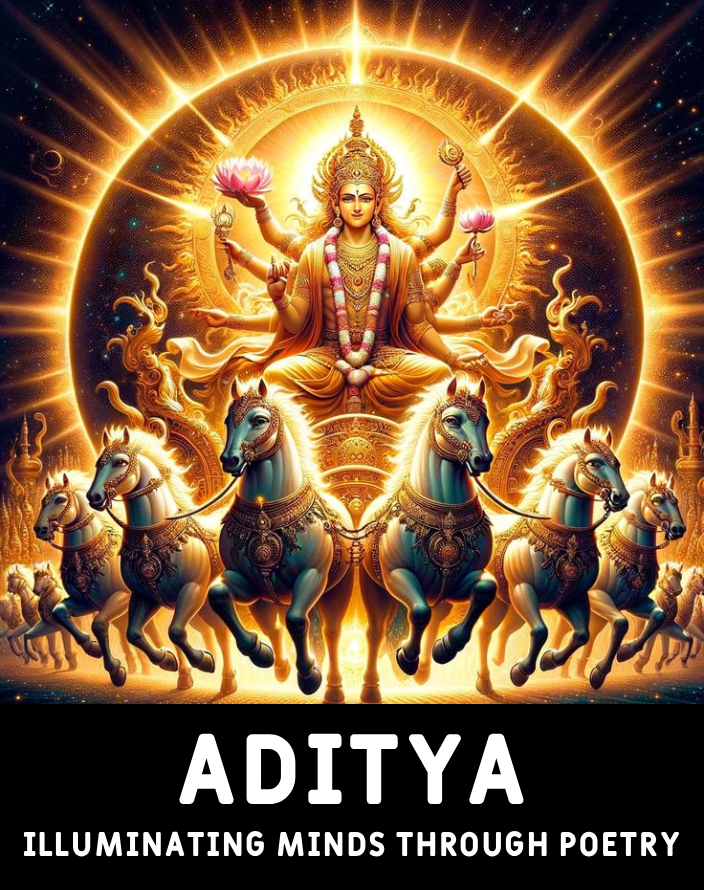
Beneath the sun’s eternal gaze,
Where rivers meet in mystic embrace,
The Mahakumbh rises, a timeless tide,
A beacon where the infinite and finite collide.
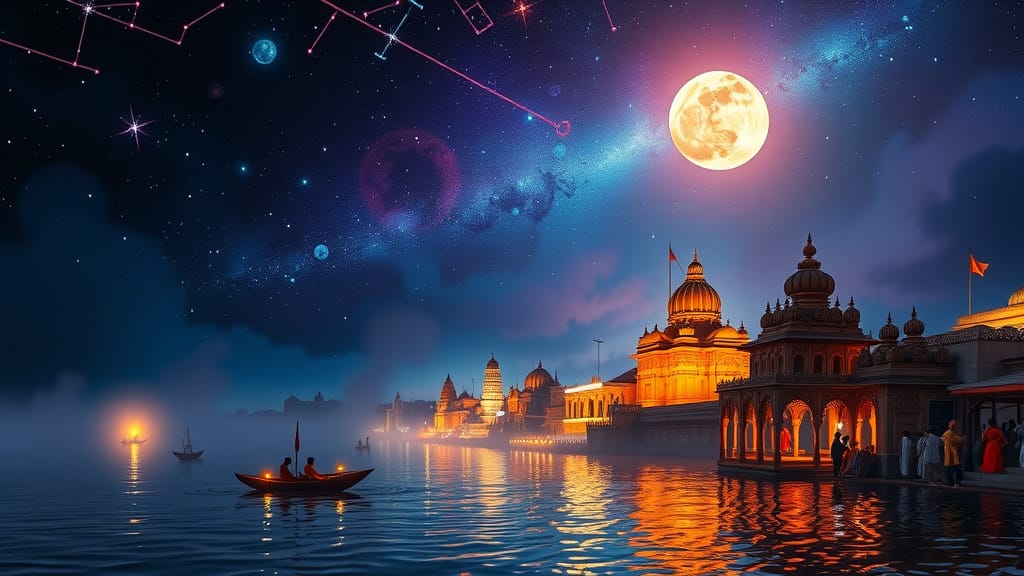
The rivers flow, their whispers deep,
Of sages’ penance and vows they keep,
From distant peaks to this hallowed ground,
They cradle the prayers of the devout profound.
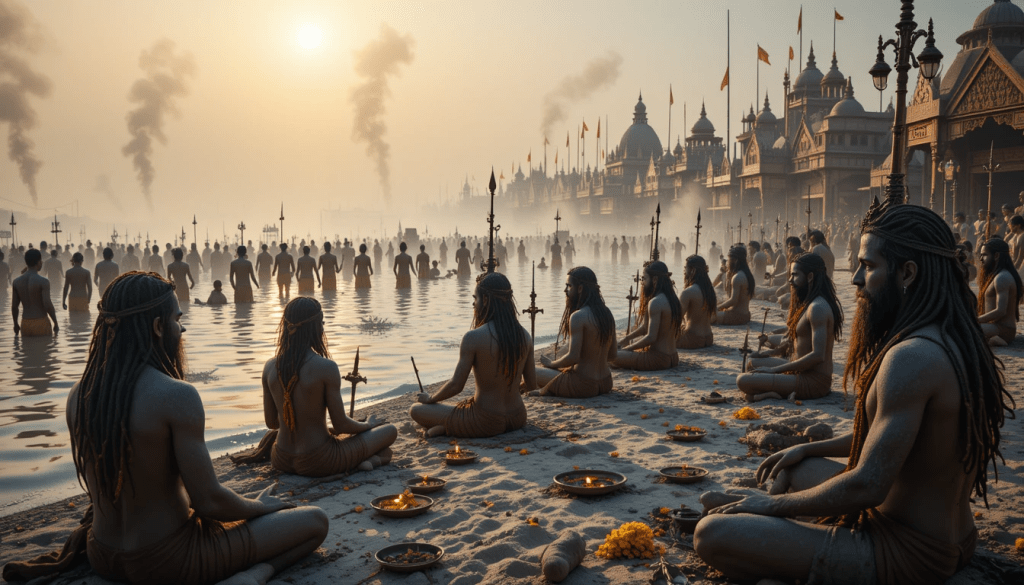
Ash-smeared ascetics, their eyes aglow,
Bear wisdom from ages the cosmos knows.
Silent as mountains, yet their chants resound,
A mystic rhythm in the world unbound.
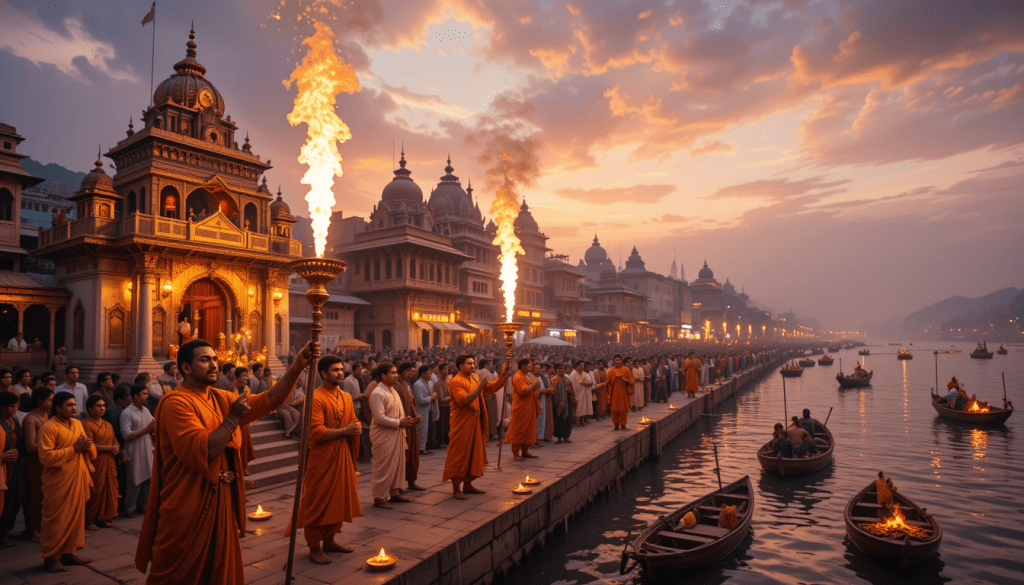
Devotees arrive with hearts contrite,
Through the darkest night toward holy light,
A million hopes in each step they take,
For salvation’s dawn and bonds to break.
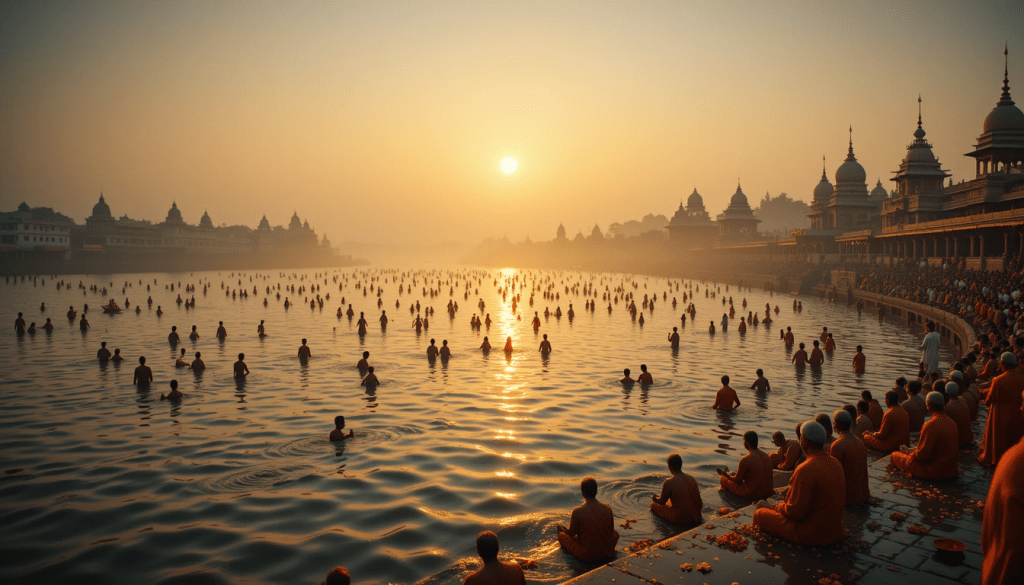
The sangam gleams in the morning haze,
Its waters aglow in the sun’s first rays.
Each droplet holds a sacred hymn,
A mirror reflecting the soul within.
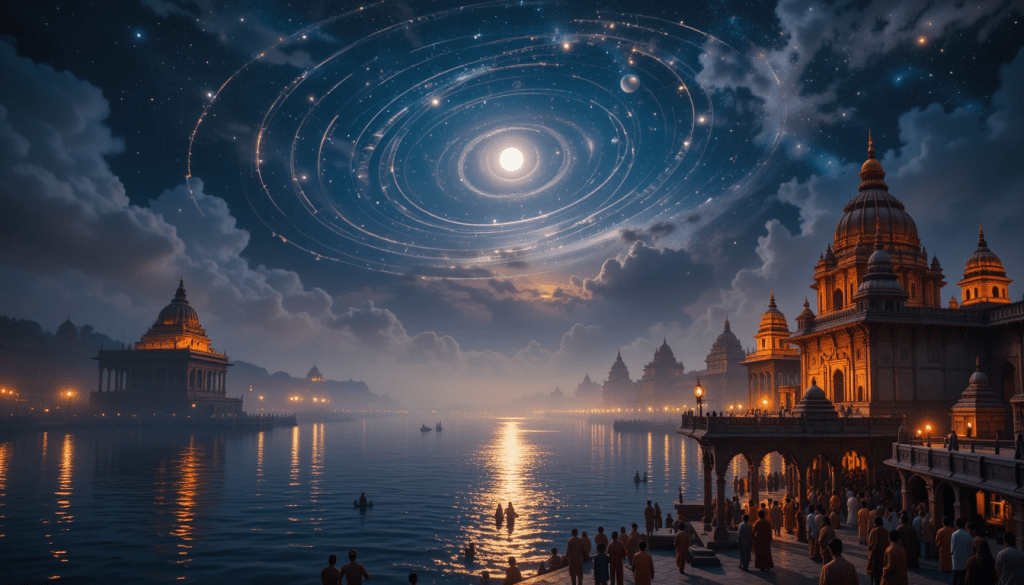
Time bows here, as moments freeze,
Each breath a prayer, a whispered plea,
“Wash away my sins, my burdens, my strife,
Let me awaken to eternal life.”
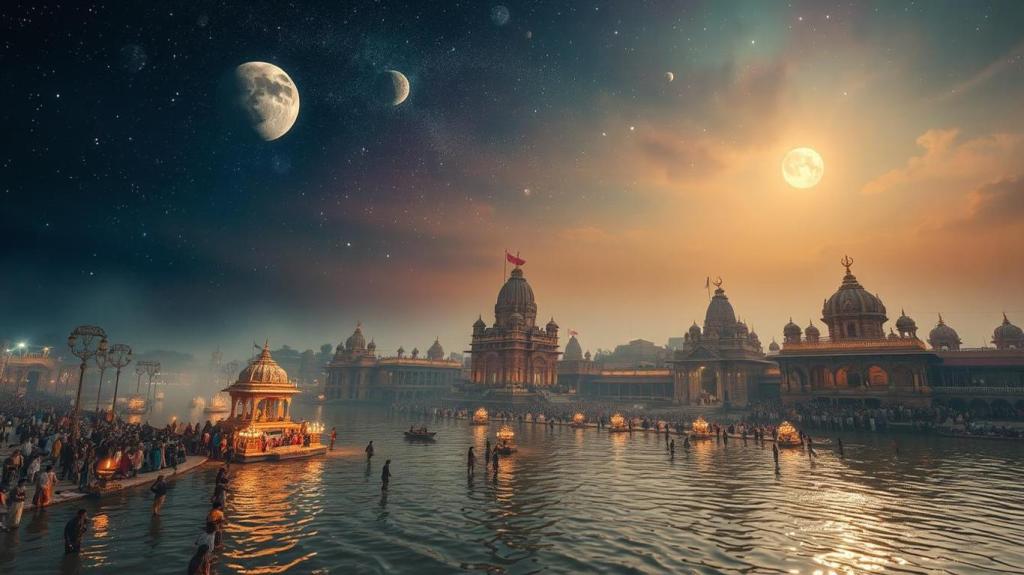
Once in twelve years, the Kumbh appears,
To draw the faithful across the years.
But rarer still, the Mahakumbh dawns,
A cosmic cycle where faith is reborn.
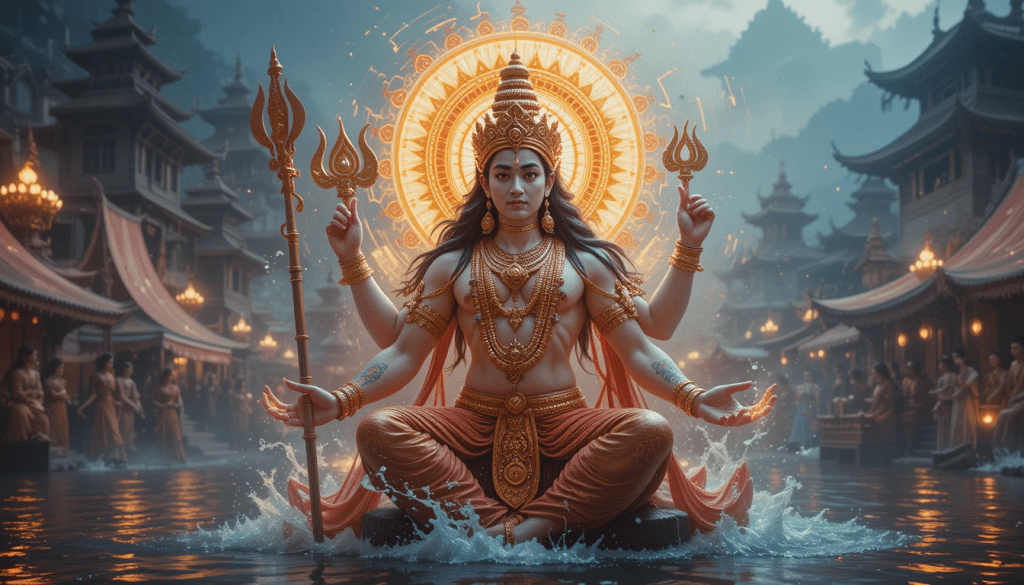
Every 144 years, the heavens align,
As stars and planets echo the divine.
A celestial rhythm guides the date,
When gods descend and mortals await.
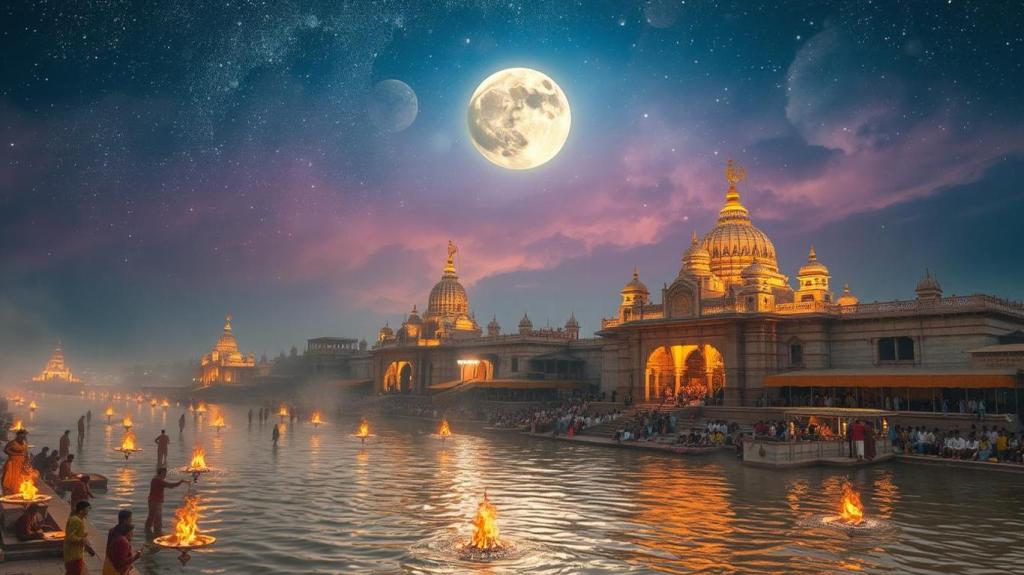
The Mahakumbh recalls that fateful hour,
When Amrit, the nectar of celestial power,
Spilled upon earth in a heavenly flight,
Blessing the waters with eternal light.
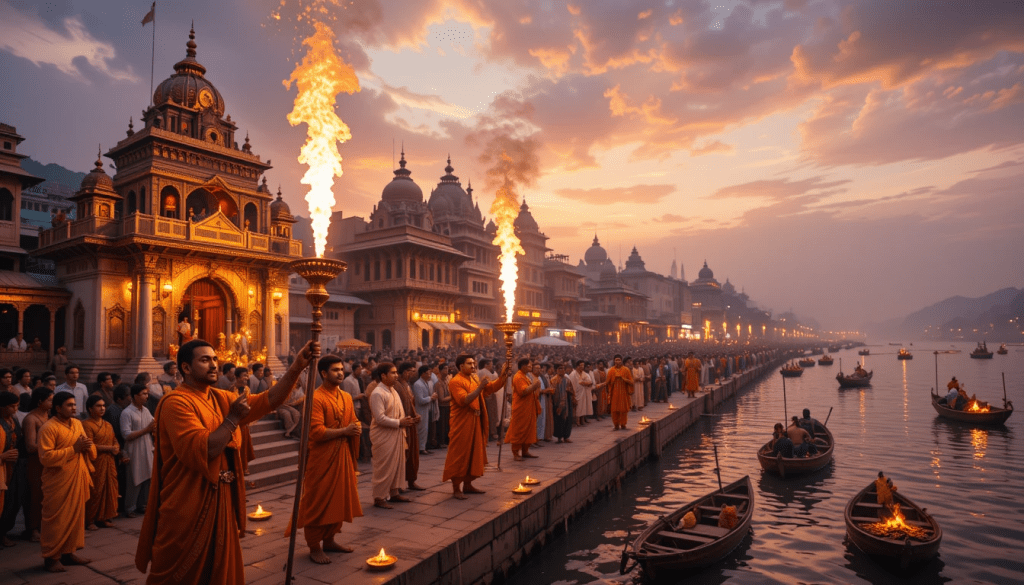
Flags flutter high; the conch shells call,
The cosmos responds; the heavens enthrall.
This union of spirit, of faith, of land,
Is a tapestry woven by the Divine Hand.
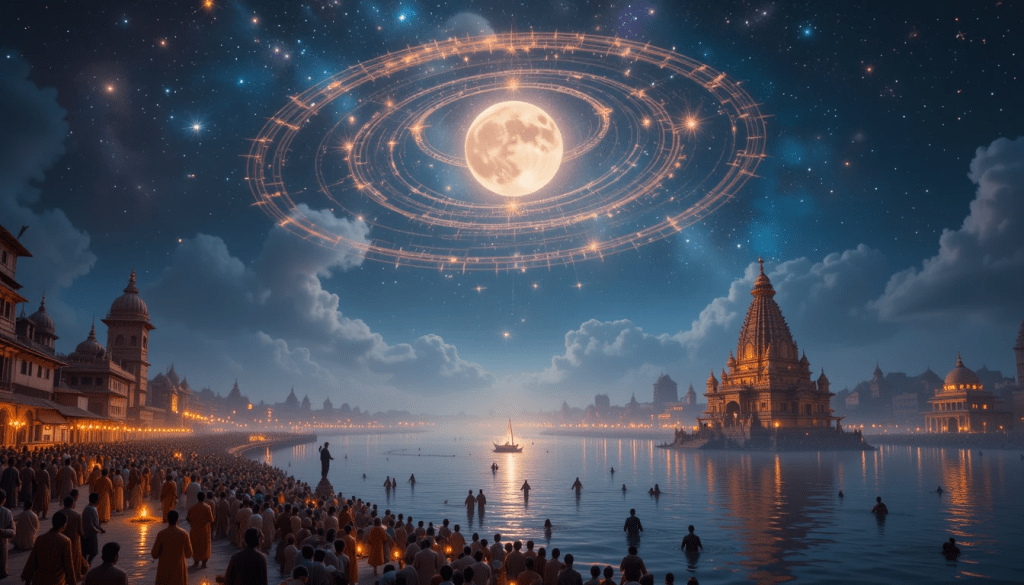
Each act, a ritual, each heart, a shrine,
Each soul ablaze with the spark divine.
Through the veil of Maya, truth is unfurled,
The Mahakumbh reveals the soul of the world.
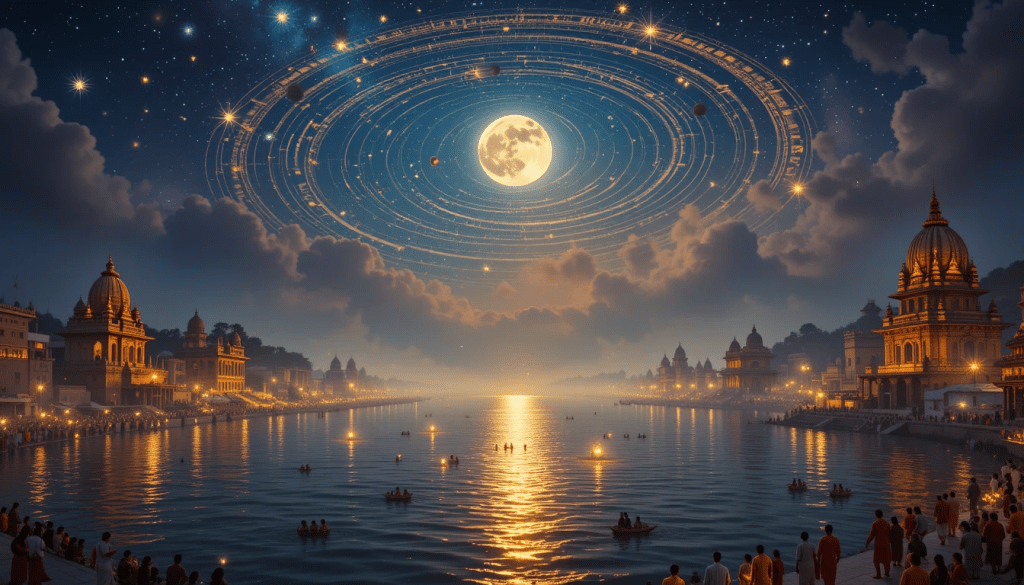
The Ganga speaks in her ceaseless flow,
“Child of the cosmos, come to know:
Your journey ends not at my wave,
But where the self dissolves, and the eternal saves.”
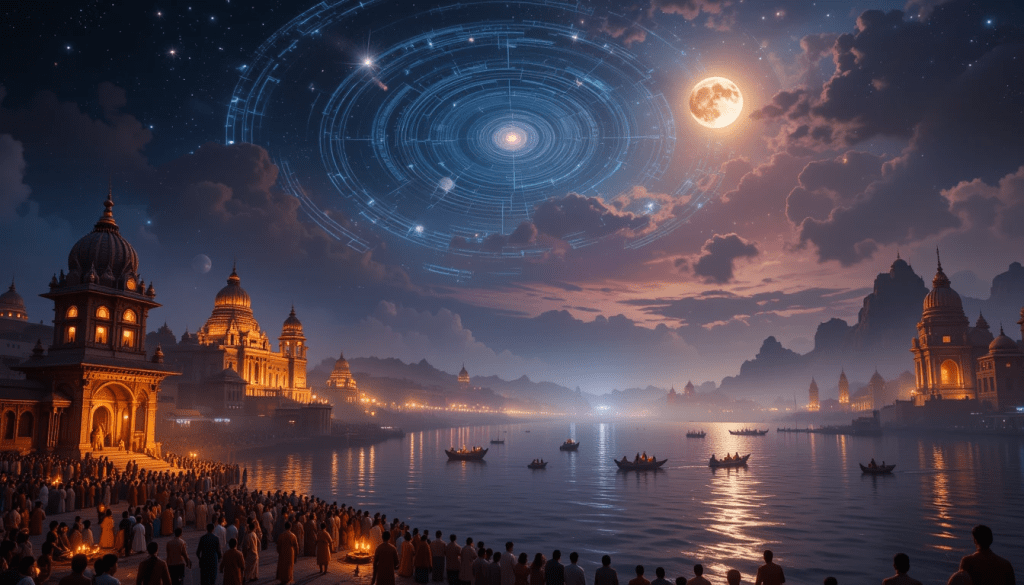
The Mahakumbh is not merely an event; it is the axis upon which faith revolves, uniting the past, present, and future in a single, eternal moment. Its occurrence every 144 years is a reminder of our connection to the grand cycles of the cosmos, where even the smallest human life is part of a divine rhythm. It is said that during this sacred time, the nectar of immortality; the Amrit still flows unseen, blessing those who bathe in the holy waters. The Mahakumbh is not just a celebration of faith but a testament to the enduring relationship between humanity and the divine, offering a glimpse of eternity to all who seek it.
Glossary:
- Mahakumbh: A grand spiritual festival held once every 144 years at the confluence of the Ganga, Yamuna, and the Saraswati rivers. It is the rarest and most significant form of the Kumbh Mela, attracting millions of pilgrims seeking spiritual purification and liberation.
- Kumbh Mela: A Hindu pilgrimage occurring every 12 years, rotating among four sacred sites—Haridwar, Prayagraj, Ujjain, and Nashik. It symbolizes the eternal struggle between good and evil and the quest for divine blessings.
- 144-Year Cycle: The Mahakumbh is held once in 144 years due to the alignment of specific cosmic events based on ancient Vedic astrology. This rare alignment involves Jupiter (Brihaspati), the Sun, and the Moon, which enter certain zodiac constellations simultaneously. This alignment is believed to amplify the spiritual potency of the waters, infusing them with divine energy akin to the Amrit (nectar of immortality).
- Amrit Manthan (Churning of the Ocean): The Gods (Devas) and demons (asuras) churned the ocean of milk (Samudra Manthan) to obtain the nectar of immortality (Amrit). As the nectar emerged, a celestial fight ensued, and drops of Amrit spilled at four locations—Haridwar, Prayagraj, Ujjain, and Nashik—sanctifying these sites forever. The Mahakumbh and Kumbh Mela commemorate this divine event.
- Celestial Alignment: The Mahakumbh’s timing corresponds to unique planetary and stellar arrangements where Jupiter, the Sun, and the Moon align in specific houses of the zodiac. These alignments are believed to create an ethereal channel between the mortal and the divine, magnifying the spiritual significance of bathing in the sacred rivers.
- Sangam: The sacred confluence of three rivers—the Ganga (symbolizing purity and liberation), the Yamuna (symbolizing love and compassion), and the Saraswati (a hidden, river symbolizing wisdom). This tri-river meeting point is considered the holiest site for spiritual awakening and cleansing.
- Cosmic Rhythm: The belief that the Mahakumbh mirrors the celestial cycles, symbolizing humanity’s connection to the universe. These cycles remind us of our role within the cosmic order, urging us to realign our lives with divine principles during this sacred time.
- Gross Body: The “gross body” refers to the physical, tangible body, also called “Sthula Sharira” in Sanskrit, which is made up of the five elements (earth, water, fire, air, and space) and is perceived through the senses; it is the body that experiences birth, aging, and death.
- Subtle Body: The “subtle body,” also called “Sūkṣma Śarīra” in Sanskrit, refers to a non-physical body composed of the mind, vital energies (prana), and subtle elements, which is considered to be the essence of the physical body and persists even after death, carrying the individual’s consciousness through reincarnation; it is essentially the “body of the mind” that connects the physical body to the spiritual realm.
- Causal Body: The “causal body” (also called “Karana Sharira”) refers to the most subtle and innermost aspect of a person, considered the seed or source of both the subtle body (mind, emotions) and the gross physical body, essentially storing the karmic imprints and memories from past lives, shaping future experiences through reincarnation; it is seen as the “cause” behind our existence and is beyond the reach of our conscious mind. In Vedanta philosophy, the causal body is seen as a veil that obscures the true nature of the Atman (soul) due to “avidya” (ignorance).
- 2025 Maha Kumbh Mela planetary positions: Jupiter: In Aquarius (Kumbh rashi); Sun: In Capricorn (Makar rashi); Moon: In Capricorn (Makar rashi).
 Addy's Verse
Leave a comment